Bladenboro is a small town in Bladen County, North Carolina, about forty miles south of Fayetteville, in the flat farm country near the Green Swamp. In the winter of 1953–54 it was the kind of place where everyone knew each other, where farms stretched for miles, and where the loudest nighttime sounds came from frogs and crickets. Then something began killing animals in a manner so brutal and so strange that the town believed a supernatural predator was on the loose. The newspapers called it the Beast of Bladenboro. More than seventy years later, the town still tells the story — and still holds a festival for the creature that terrorised it.
The killings begin
The first animal deaths possibly related to the Beast were reported on 29 December 1953. In Clarkton, a few miles from Bladenboro, a witness described a sleek, black, cat-like animal, about five feet long with a round face, dragging a dog into the brush. That night, Mrs. C. E. Kinlaw, a Bladenboro resident, heard a sound outside her home that she later described to reporters as being like a woman screaming and a panther’s cry all at once.
On 31 December, two dogs belonging to a local man named Johnnie Vause were found dead near their kennels. Their bodies bore strange marks: their skulls were crushed, their ears chewed, and blood seemed to be missing. Vause told reporters that the top of one dog’s head had been torn off and its body crushed, as if it had been in something’s mouth. On 2 January 1954, the creature returned, dragging away a dog carcass. On the night of 5 January, a pet rabbit was found dead, and by that point at least six dogs had died. A goat was reported dead with its head flattened. On 7 January, another dead dog was found in a pasture near the Bladenboro swamp.
The descriptions of the animal varied, as descriptions of unknown animals usually do. One witness called it about four and a half feet long, bushy, and resembling a bear or panther. Another, Mrs. George Williamson, said she saw it behind her house and described it as about ninety to a hundred pounds, resembling a panther, with a long tail and a face like a cat. On 4 January, Lloyd Clemmons reported seeing a dark, cat-faced animal, about three feet long with a fourteen-inch tail, walking stealthily. On 12 January, motorists on Highway 211 reported an animal four feet long and two feet high. The tracks that were found were described as strange, but generally feline.
The name and the hunt
The newspapers gave the creature its name, and the name did the damage. Because the dead animals appeared drained of blood, reporters began calling it the “vampire beast”, and the phrase stuck. The image of a blood-drinking predator, loose in a small farming town, was irresistible to the press, and the story spread well beyond Bladen County. The Wilmington Morning Star reported on 5 January that “this nervous town chewed its collective nails today, dreading the pitch of night that might bring a return visit by a mystery killer.”
The response was a hunt. Hundreds of armed men descended on Bladenboro, some from as far away as Chapel Hill, where four university fraternity brothers arrived on 8 January to hunt the beast. The town’s police chief told the press that the creature was likely a large bobcat or panther, but admitted the wounds were unusual. Zoologists at the State Museum of Natural History in Raleigh offered the opinion that such reports were often imaginative, and noted that no authentic panther or mountain lion had been found in North Carolina for nearly fifty years, the last near Highlands in 1905.
On 7 January, officials called off the hunt, not because the beast had been found, but because the hunters themselves had become the danger: too many armed men, in the dark, in unfamiliar swamp country, shooting at anything that moved. By that point six dogs had died and a seventh had vanished.
The bobcat
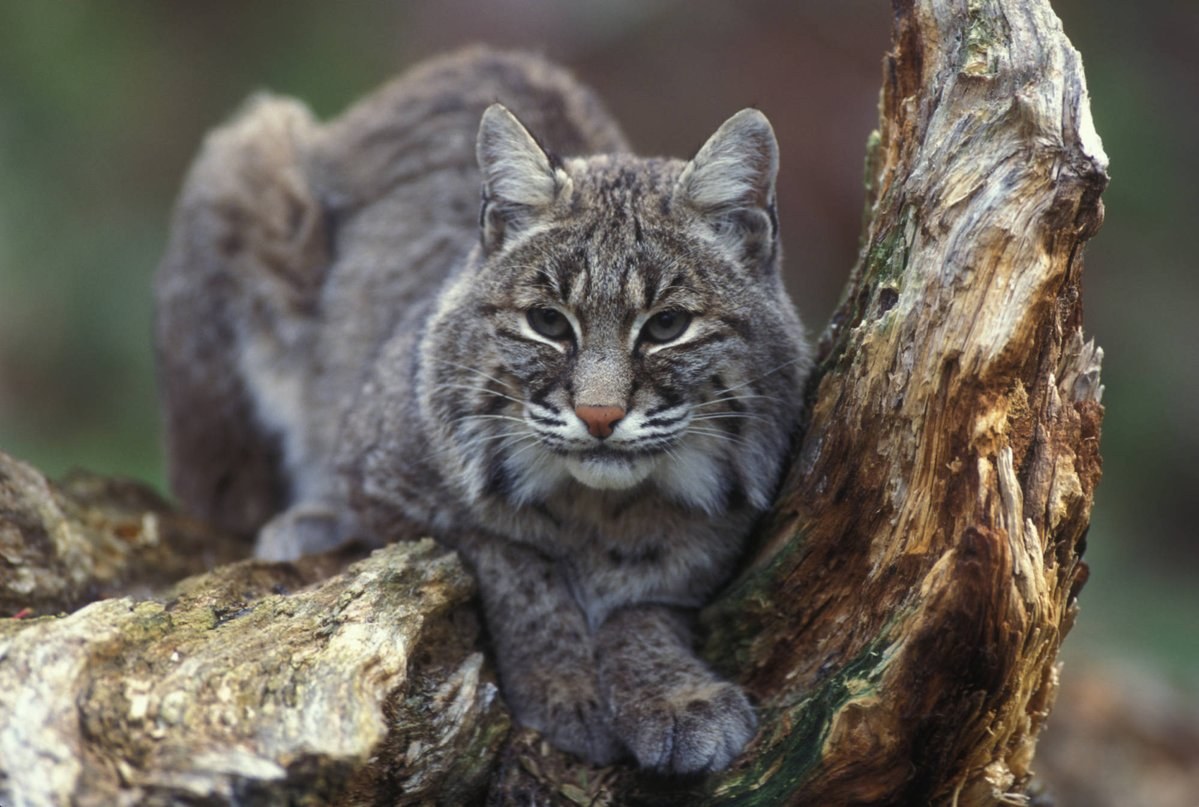
On 13 January, a local farmer named Luther Davis found a bobcat struggling in a steel trap in Big Swamp, four miles from the town, and shot it in the head. Woodrow Fussell, the mayor of Bladenboro, told the newspapers that the Beast of Bladenboro had been found and killed. The announcement was greeted with relief — and with doubt. A bobcat is a small animal, typically fifteen to thirty pounds, and it was hard to see how one could have killed and mangled large dogs in the manner reported. The doubt has never gone away: it has been questioned ever since whether such a small cat could have done what the Beast was said to have done.
Other animals were found in the days that followed, including another bobcat and what was described as a “leopard cat”. On 19 January, a farmer named Berry Lewis found one of his hogs dead, mauled and partly eaten, which suggested that whatever was killing animals had not stopped with the bobcat’s death. The attacks then faded. The last major sighting during the original wave came around 13 January, when a man named Spurgeon Davis claimed to have encountered the creature at close range and described it as about three feet long, with a bushy tail, weighing about eighty pounds, and looking like a bobcat but much bigger. Shortly afterwards, the attacks stopped, as suddenly as they had begun.
The explanations
The most widely accepted explanation is that the Beast was a large bobcat, or several bobcats, possibly a cougar. Bobcats are native to North Carolina, they kill dogs, and they can leave wounds that look strange to people who have never seen a bobcat kill. The “bloodless” appearance of the victims, which gave the creature its vampire name, has a mundane explanation: animals that die from crushing injuries can appear drained of blood, because the blood pools internally or is lost into the surrounding tissue rather than spilling visibly. A dead dog in a kennel at night, examined by frightened owners in poor light, can look like a victim of something supernatural.
Other explanations have been offered. Some suggested an escaped exotic animal — a leopard, a jaguarundi, or another large cat that had escaped from captivity. Some suggested a wolf, a wolf-dog hybrid, or an unusually large feral dog. One man from Lumberton, A. R. Stanton, thought the beast was a German Shepherd and hound mix named Big Boy that he had given to a Native American boy who lived along the edge of Big Swamp. And some have suggested that the whole episode was exaggerated by the press and by the town itself: a series of ordinary animal deaths, a few genuinely strange ones, and a story that grew with each retelling.
There is also the question of the mayor. Sceptics have suggested that Mayor Fussell, who owned the town’s movie theatre, invented or inflated the story to draw crowds to a horror film about a monster cat that was playing at the time. The solid fact against that theory is that the mayor booked the film after the killings had started, not before. The killings were real, whatever the beast was.
The legend that stayed
Bladenboro did not forget the Beast. The town has embraced it: the creature appears on murals and merchandise, and the town holds a Beast Fest that draws visitors from across the state. The legend has outlasted the fear, and it has outlasted the explanations, because the explanations do not quite close the case. A bobcat could have killed the dogs. A bobcat could not, on the evidence, have crushed their skulls and flattened a goat’s head in the way described. The gap between what a bobcat can do and what the Beast was said to have done is the space in which the legend lives.
The Beast of Bladenboro is a reminder that cryptid cases are rarely about a single animal. They are about a community, a winter, a set of dead dogs, a newspaper phrase, and a hunt that got out of hand. Something killed animals in Bladenboro in the winter of 1953–54, in a way that frightened experienced farmers and puzzled the police. Whether it was a bobcat, a cougar, an escaped exotic, or something that has never been identified, the town’s answer has been the same for seventy years: it was the Beast, and the Beast is still part of Bladenboro.
What is documented, and what is not
Documented facts: In the winter of 1953–54, a series of animal deaths occurred in and around Bladenboro, North Carolina, beginning with reports on 29 December 1953. On 31 December, two dogs belonging to Johnnie Vause were found dead with crushed skulls and apparent blood loss. By 5 January 1954, at least six dogs had died, along with a rabbit and a goat. Hundreds of armed hunters descended on the town, and officials called off the hunt on 7 January for safety. On 13 January, farmer Luther Davis shot a bobcat in a trap in Big Swamp, and Mayor Woodrow Fussell announced the beast had been found and killed. Zoologists at the State Museum of Natural History in Raleigh expressed scepticism, noting no authentic panther had been found in North Carolina for nearly fifty years.
Unverified or disputed claims: The claim that the dead animals were drained of blood by a “vampire beast” rests on the appearance of the carcasses, which can be explained by internal blood loss from crushing injuries. The claim that the bobcat shot on 13 January was the Beast is doubted, because a bobcat is typically too small to inflict the reported injuries, and a hog was found mauled on 19 January, after the announcement. The claim that the episode was invented to promote a film is contradicted by the fact that the mayor booked the film after the killings began. No specimen of an unknown animal was ever produced, and the identity of the animal responsible for the killings was never definitively confirmed.
Sources
- https://en.wikipedia.org/wiki/Beast_of_Bladenboro
- https://www.ufomagazines.com/wonders-mark-a-hall-wonders-vol-7-no-1-2002/
- https://sasquatchchronicles.com/the-beast-of-bladenboro-animal-killings-begin/
- https://alastarpacker.weebly.com/mists–moonlight/beast-of-bladenboro-inside-story-beast-fest