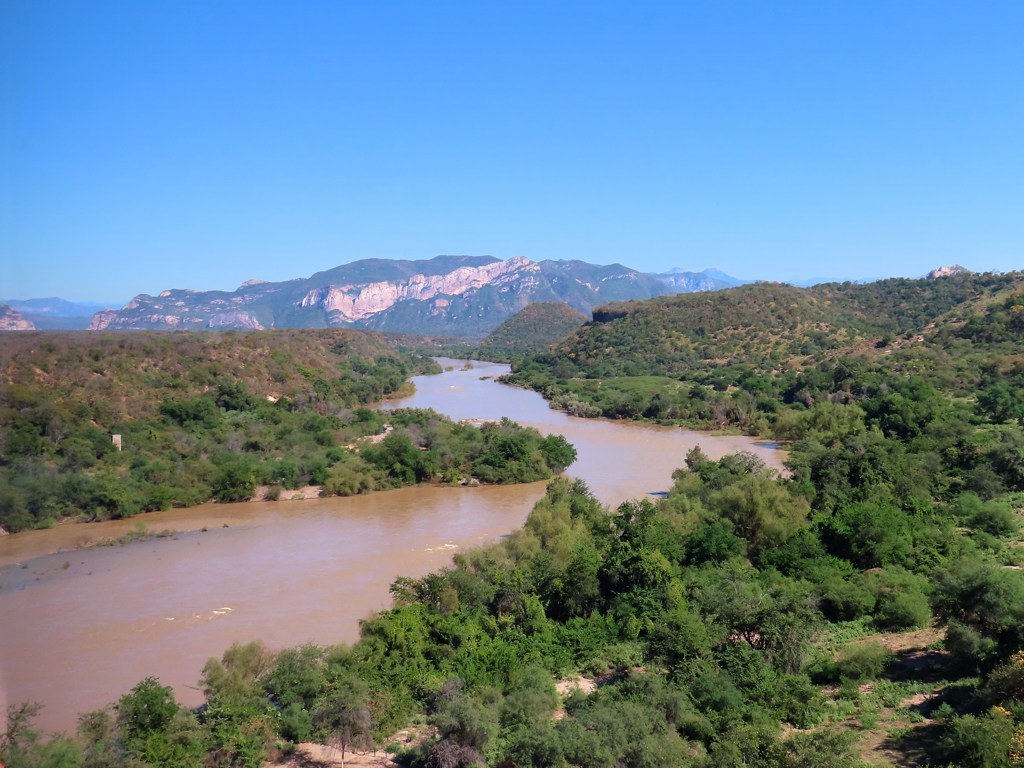
In the mountains of north-western Mexico, there is a cat that is not a puma. The people who live there call it the onza, and they say it is lighter than a puma, with longer legs, longer ears, a longer tail, and stripes on its legs that a puma does not have. It is faster, and more aggressive, and it hunts in a way a puma does not. The onza has been reported for five hundred years, from the Aztec codices to the present day, and in 1986 a dead specimen was examined by scientists, and the DNA said it was a puma. The onza is the cryptid that was solved, and yet the story will not die. That is what makes it the most interesting of its kind.
The word “onza” comes from the Spanish for a kind of lynx, and it has been used in Mexico for centuries to describe a cat that is not quite a puma. In many Mexican states, the jaguarundi — a small, dark, weasel-like cat — is also called onza, which has caused confusion, and which has given sceptics a ready explanation. But the onza of the Sierra Madre is not a jaguarundi. It is a large cat, a puma-sized cat, and the people who report it are clear about that. It is a puma, they say, but not a puma. It is something else, something that lives alongside the puma and is often mistaken for it, until you look closely.
Five hundred years of reports
The onza’s history in the written record begins with the Aztecs. The Florentine Codex, the great sixteenth-century encyclopaedia of Aztec life compiled by Bernardino de Sahagún, describes in volume thirteen a cougar-like animal called the cuitlamiztli, which is said to be more aggressive than a puma and to have a different shape. The codex is illustrated, and the illustration shows a cat that is not quite a puma, with a longer body and a different head. It is, by any standard, the oldest description of the onza, and it was written by people who knew their cats.
The modern history of the onza begins in 1938, when two American brothers, Dale and Clell Lee, were hunting in the mountains of Sinaloa with an Indiana banker named Joseph Shirk. Near La Silla Mountain, they shot a cat. Dale Lee was certain it was not a cougar. The animal was lighter, with longer legs and longer ears, and it did not look like any puma he had seen. Photographs of the animal were taken, and they seem to show an ordinary puma, but Lee insisted until the end of his life that what he had shot was an onza. The photographs, like the animal, are ambiguous, and the argument has never been settled.
The 1986 specimen
In January 1986, the onza produced its most famous piece of evidence, and its most disappointing one. On 1 January 1986, two Mexican hunters, Andres Rodriguez Murillo and Ricardo Zamora, killed a female cat near the town of San Ignacio, in Sinaloa. The animal was sixty pounds — twenty-seven kilograms — with a body forty-five inches long and a tail twenty-three inches long. It was, by the measurements, a small puma, but its shape was wrong: it had a lighter frame than a puma, longer, striped legs, longer ears, and a longer tail. Rodriguez Murillo and Zamora were certain they had killed an onza, and they took the body to the town.
The specimen was examined in February 1986 by the cryptozoologists J. Richard Greenwell and Troy L. Best, who travelled to Sinaloa to see it. Greenwell and Best measured the animal, photographed it, and took samples. Their conclusion, published in the journal Cryptozoology, was that the animal was an onza — a distinct kind of cat, lighter and longer-legged than a puma, with striped legs and longer ears. It was, they said, the first onza specimen ever examined by scientists, and it proved that the animal was real.
The DNA said otherwise. Samples from the 1986 specimen were subjected to electrophoresis and mitochondrial DNA testing, and the results, published by Dratch and colleagues in Cryptozoology in 1996, showed that the animal was identical to the North American puma. The onza, on the DNA evidence, was a puma — a small, lightly built puma, with longer legs and striped fur, but a puma nonetheless. The specimen that was supposed to prove the onza’s existence had, instead, disproved it.
What the witnesses describe
The descriptions of the onza are consistent, and they are specific in a way that sets the animal apart from the puma. It is described as a cat the size of a puma, but lighter in build, with longer legs, longer ears, and a longer tail. Its fur is tawny, like a puma’s, but its legs are striped, and its ears are longer and more pointed. It is said to be faster than a puma, and more aggressive, and to hunt in a different way — in the open, rather than by ambush. It is also said to be solitary, and to live in the high country, in the pine-oak forests of the Sierra Madre Occidental, where the puma also lives.
The theories
The most interesting theory about the onza comes from the German mammalogist Helmut Hemmer, who suggested that the onza might be a surviving American cheetah, Miracinonyx, a species of cheetah that lived in North America during the Pleistocene and went extinct at the end of the Ice Age. The American cheetah was lighter and longer-legged than a puma, with a longer tail, and it hunted in the open, by speed rather than by ambush — all of which matches the onza’s description. If a population of American cheetahs had survived in the Sierra Madre, Hemmer argued, it would look exactly like the onza. It is a striking theory, and it has the virtue of proposing a real animal, one that is known from the fossil record, rather than an unknown species.
The mainstream view is simpler. Most scientists consider the onza to be a puma — a small, lightly built puma, with longer legs and striped fur, of the kind that the DNA testing of the 1986 specimen identified. Pumas vary in size and shape across their range, and a small, long-legged puma in Sinaloa could easily be mistaken for a different species by a hunter who had never seen one like it. The striped legs, the longer ears, the lighter frame: all of these are within the range of variation for pumas, and none of them requires a new species to explain.
The sceptical view
No body, no skeleton, no photograph and no DNA sample has ever established the existence of the onza as a distinct species. That is the hard fact at the centre of the story, and it has not changed since 1986. The one specimen that was examined by scientists turned out, on DNA testing, to be a puma. The 1938 animal was photographed, and the photographs seem to show an ordinary puma. The 1995 animal was photographed, but the body was not preserved. Everything else is testimony.
Sceptics point out that the onza’s description — a lighter, longer-legged puma with striped legs — is exactly what a young puma looks like, or a puma in poor condition, or a puma seen at a distance in bad light. Dale Lee was certain he had shot an onza, but the photographs of his animal show a puma. Rodriguez Murillo and Zamora were certain they had killed an onza, but the DNA said puma. Certainty, in the onza’s history, has been wrong every time it has been tested.
Why the story endures
The onza endures because it was solved, and the solution did not satisfy anyone. The DNA said puma, and the hunters said onza, and both sides are still arguing. The onza is the cryptid that proves the limits of DNA testing: a test can tell you what species an animal belongs to, but it cannot tell you what the people who saw it thought they saw, or why they were so certain, or what it is like to live in a place where a cat that is not quite a puma hunts in the mountains.
It also endures because the books endure. Robert E. Marshall wrote about the onza in 1961, and Neil Carmony wrote Onza!, published in 1995, a whole book about a cat that may not exist. The onza has a literature, and the literature has a life of its own, independent of the animal. A cryptid with a book is a cryptid that will be remembered, and the onza, lighter and longer-legged and striped, is a cryptid that deserves to be remembered, whether it is a puma or not.
What is documented, and what is not
Documented facts: The onza is a legendary cat reported from the Sierra Madre Occidental of Sinaloa, Mexico, described as lighter and longer-legged than a puma, with striped legs, longer ears and a longer tail. The Florentine Codex (sixteenth century) describes a cougar-like animal called the cuitlamiztli. Bernal Díaz del Castillo (1520) described two sorts of lion in Montezuma’s zoo, one “long-eared like a wolf”. In 1938, Dale and Clell Lee shot a cat near La Silla Mountain, Sinaloa, which Dale Lee insisted was an onza; photographs seem to show an ordinary puma. On 1 January 1986, Andres Rodriguez Murillo and Ricardo Zamora killed a female cat near San Ignacio, Sinaloa; it weighed 60 lb (27 kg), with a 45-inch (1.1 m) body and a 23-inch (58 cm) tail. J. Richard Greenwell and Troy L. Best examined it in February 1986. Electrophoresis and mitochondrial DNA testing showed the specimen was identical to the North American puma (Dratch et al., Cryptozoology 12, 1996). A male specimen with classic onza features was killed in Sinaloa on 15 April 1995 by Raul Jiminez Dominguez, but the body was not preserved.
Unverified or disputed claims: That a distinct species of cat, separate from the puma, lives in the Sierra Madre rests on eyewitness testimony and on photographs, none of it supported by DNA evidence. The 1986 specimen, examined by Greenwell and Best as an onza, was shown by DNA testing to be a puma. That the onza is a surviving American cheetah (Miracinonyx), as Helmut Hemmer suggested, is speculation, with no fossil evidence for a surviving population. The claim that a frozen onza corpse was held at Texas Tech University in the 1990s is unverified, and no such specimen has been produced. The suggestion that the onza is a distinct subspecies of puma is a hypothesis, not a finding.
Sources
- https://alchetron.com/Onza
- https://www.allthingsnature.org/what-is-an-onza.htm
- https://en.wikipedia.org/wiki/Onza
- https://www.yumpu.com/en/document/view/15743572/mysterious-creatures-a-guide-to-cryptozoology/457