Every state in America seems to have its own version of Bigfoot, but Ohio’s has a name of its own, a habit all its own, and a case file that reads like a siege. The Ohio Grassman is said to stand seven to nine feet tall, covered in dark, matted hair, smelling of musk and rot, and moving through the forests and farmland of eastern Ohio with a confidence that witnesses find unnerving. It is also said to eat tall grass and to weave the grass into hut-like nests, which is how it got its name. Whether the creature is a flesh-and-blood animal, a misidentified bear, or a story that grew in the telling, it has been reported for more than a century, and the reports have never quite stopped.
The summer of the Minerva Monster
The case that fixed the legend began in August 1978, on a farm near Minerva in Stark County, in the rolling country of north-eastern Ohio. The Cayton family — Evelyn and Howe Cayton, their children and grandchildren — reported a tall, hairy figure standing in a field near their home, watching them. The grandchildren saw it first, and ran inside screaming. When the adults went out to look, they saw it too: a creature about seven feet tall and perhaps 300 pounds, covered in dark hair, standing by a gravel pit and pawing through rubbish.
It came back. Over the following nights, the family reported the creature returning again and again, throwing rocks at the house, scratching at the windows, and leaving footprints thirteen to seventeen inches long pressed into the soft ground, spaced in a stride of nearly five feet. Neighbours, the Lowe family among them, reported the same disturbances and found mangled rabbits near their property. The county sheriff’s office came out to investigate and could not explain the tracks or the noises. Plaster casts taken of the prints were said to show dermal ridges — the fine skin lines that a hoaxer’s wooden cutout would not leave.
The story spread fast. Newspapers picked it up, and the case became known as the Minerva Monster. The Caytons stuck to their account for the rest of their lives. When investigators returned in 1985 and again in 1991 and asked the family to tell the story again, it came back almost word for word. The Akron Beacon Journal returned to the story in 1980 with a substantial retrospective, and found residents who still claimed strange activity around the Cayton property. Evelyn and Howe Cayton are now dead, but family members and neighbours who say they witnessed the early encounters have not changed their accounts.
An older wild man
The Grassman legend did not begin in 1978. Older newspaper reports from the nineteenth century describe hairy wild men in the Ohio country. In January 1869, a newspaper carried a report from Gallipolis, down on the Ohio River, of a hairy creature that sprang onto a man riding in a carriage, dragged him to the ground, and set to biting and clawing him. It reads today like a tall tale, and it was treated as one at the time, but it is part of the older wild-man folklore from which later Ohio monster traditions grew.
By the late 1970s, reports of a large, hairy biped were appearing across the state, and the Minerva encounters gave the tradition a centre and a name. The creature described at Minerva was heavier and more aggressive than the shy Bigfoot of the Pacific Northwest. Witnesses spoke of glowing red eyes, loud grunting, and rocks thrown at houses. Some described two figures on a hill at once. One account says the family dog was found killed. The Grassman, in the telling, does not flee from people. It stands its ground, watches, and comes back.
Salt Fork State Park
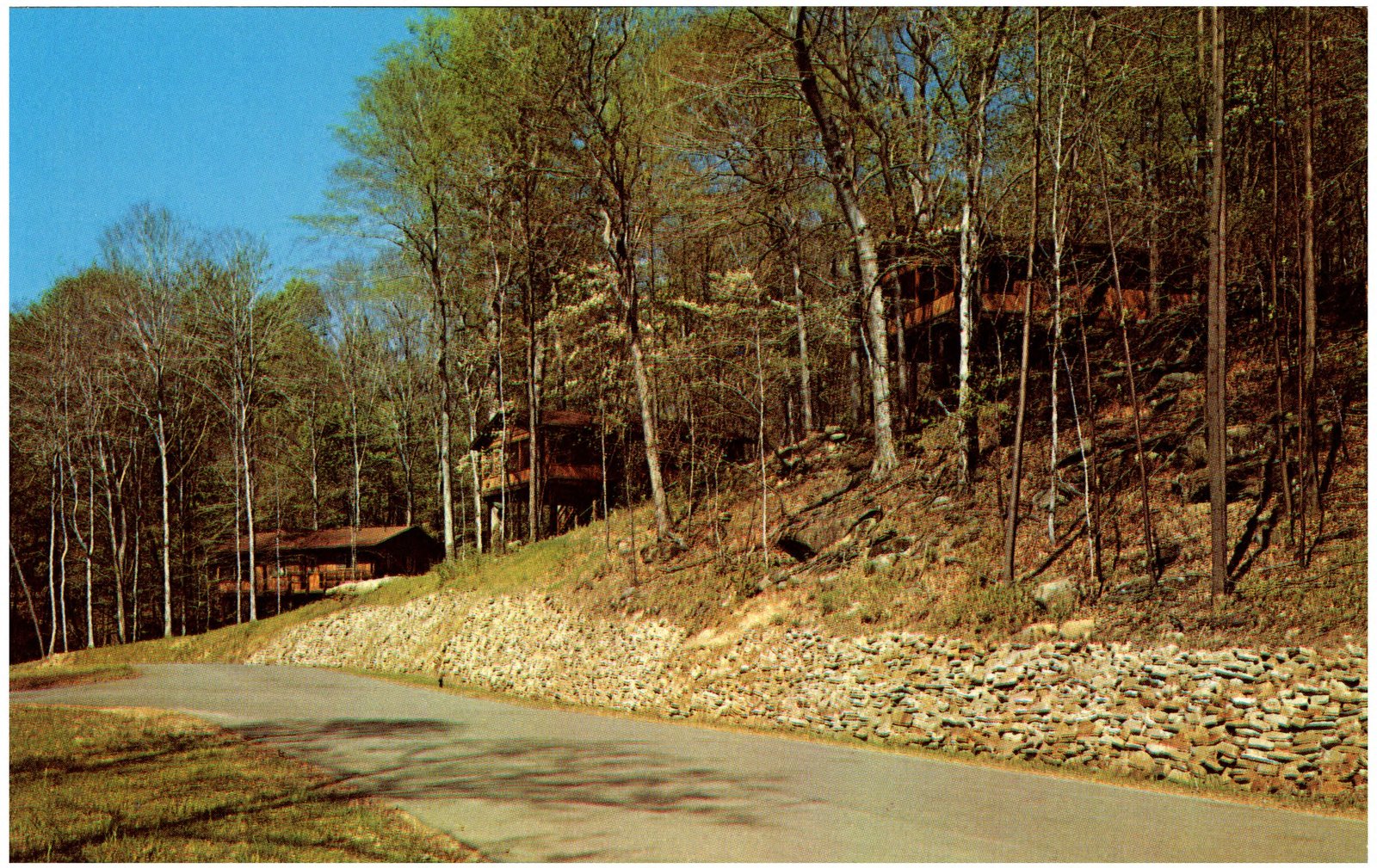
If the Grassman has a home, it is Salt Fork State Park, a sprawl of woods and water in eastern Ohio, in Guernsey County. The park covers some 17,000 acres of forest, hills and shoreline around a large reservoir, and it has logged more than thirty-six Grassman sightings since the mid-1980s. In 2017 alone, the park and its surroundings produced ten reports. The park now hosts an annual Ohio Bigfoot Conference, where witnesses compare plaster casts and recordings and plan the next season’s searches.
The reports from Salt Fork follow a pattern. Hikers and campers describe a tall, dark figure at the tree line, sometimes glimpsed for only a second. Others report rock-throwing, shadowy figures near the cabin area, and strange vocalisations at night. Footprint casts have been made in and around the park. Paranormal television crews have filmed there. The park’s most famous feature, for monster hunters, is a ridge the locals call Bigfoot Ridge. Sightings continue to be reported frequently, with some attracting enough attention to be featured in local news.
The Kenmore encounter and the years after
Ten years after Minerva, in 1988, came the Kenmore encounter in the suburbs of Akron, where a group of boys out with their dog ran into a large, hairy creature. The boys’ account added another detail to the pattern: the creature seemed unbothered by the dog and by the boys, and simply moved off into the trees. Reports have continued into the present day. In January 2022, men reported seeing a Bigfoot-like creature walking in Salt Fork State Park. The Bigfoot Field Researchers Organization maintains a log of classified sightings in Ohio, including nineteen in Portage County alone, covering eyewitness accounts, tracks, vocalisations and daylight sightings dating back to the 1960s.
The Grassman is also a subject of books. Christopher Murphy’s “Bigfoot Encounters in Ohio: Quest for the Grassman” gathers the reports and the history. Local newspapers, including the Perry County Tribune, have covered the legend’s effect on the region, noting that the Grassman has become part of the local identity in counties that otherwise rarely make the news.
What the witnesses describe
The descriptions are remarkably consistent across decades. The creature stands between six and ten feet tall, most commonly about seven feet, and weighs an estimated 300 pounds. It is covered in dark or matted hair, sometimes described as reddish-brown. Its eyes are sometimes described as glowing red in the dark. It smells powerfully of musk, or of rot. It is said to eat tall grass and grain, and to build hut-like nests from woven grass — the habit that gives it its name. Witnesses describe it as more aggressive than other Bigfoot reports: it throws rocks, it approaches houses, it does not run away.
That aggression is part of what makes the Grassman distinctive. In most Bigfoot traditions, the creature is shy, glimpsed at a distance, gone before the witness can focus. The Grassman, by contrast, is reported to stand and watch, to return night after night, and to make its presence known. Whether that reflects a real behavioural difference, or simply the way a frightening story grows when a family feels besieged, is one of the questions the case raises.
The sceptical view
No body, no verified DNA sample, no living specimen and no scientifically authenticated photograph has established the existence of an unknown large primate living in Ohio. That is the hard fact at the centre of the Grassman story, and it has not changed in nearly fifty years of reports.
Sceptics offer several explanations. Ohio has a healthy black bear population, and a bear standing on its hind legs, seen at dusk through trees, can look remarkably like a hairy man. Misidentified wildlife, pareidolia, and the power of suggestion all play a part. A footprint cast with apparent dermal ridges is intriguing, but ridges can be produced by the casting process itself, and no cast has survived independent laboratory analysis. The rock-throwing and window-scratching at Minerva were never independently witnessed by investigators, and the sheriff’s office, while unable to explain the tracks, never found the creature either.
There is also the question of ecology. A breeding population of seven-foot primates would need a large territory and a large food supply, and would leave bones, droppings and hair. Ohio’s forests are heavily visited, hunted and logged. Nothing of the kind has ever been recovered. The most likely explanation, on the evidence available, is that the Grassman is a composite: real animals misidentified, real fear amplified by retelling, and a local legend that gives a name to the unease of being alone in the woods at night.
Why the story endures
The Grassman endures because the Minerva case is unusually well documented for a monster story. Multiple witnesses, over several weeks, told the same story to police, to journalists and to investigators years apart. The Caytons gained nothing from it; they were, by most accounts, harassed by the attention that followed. And the story has a setting — the farms of Stark County, the woods of Salt Fork — that anyone in Ohio can visit and recognise.
It also endures because it is Ohio’s own. The Pacific Northwest has Bigfoot. Florida has the Skunk Ape. Ohio has the Grassman, and the state has adopted it. The annual conference at Salt Fork, the local news coverage, the books and documentaries all keep the legend alive, and each new sighting, however thin, adds another line to a story that now spans a century and a half.
What is documented, and what is not
Documented facts: In August 1978, the Cayton family and their neighbours near Minerva, Ohio, reported repeated encounters with a large, hairy creature around their property; the county sheriff’s office investigated and could not explain the tracks. The Akron Beacon Journal published a retrospective on the case in 1980. Salt Fork State Park has logged more than thirty-six reported sightings since the mid-1980s and hosts an annual Bigfoot conference. A January 1869 newspaper report from Gallipolis described a hairy creature attacking a man in a carriage. No body, verified DNA sample or authenticated photograph of the creature exists.
Unverified or disputed claims: The claim that a seven-to-nine-foot unknown primate lives in Ohio rests entirely on eyewitness testimony and footprint casts, none of which has been independently authenticated. The claim that plaster casts from Minerva show dermal ridges has been reported but not verified in a laboratory. The claim that the creature builds nests from woven grass and eats tall grass is part of the folklore, not an observed fact. The claim that the 1869 Gallipolis report describes the same creature is a retrospective connection, not a documented link.