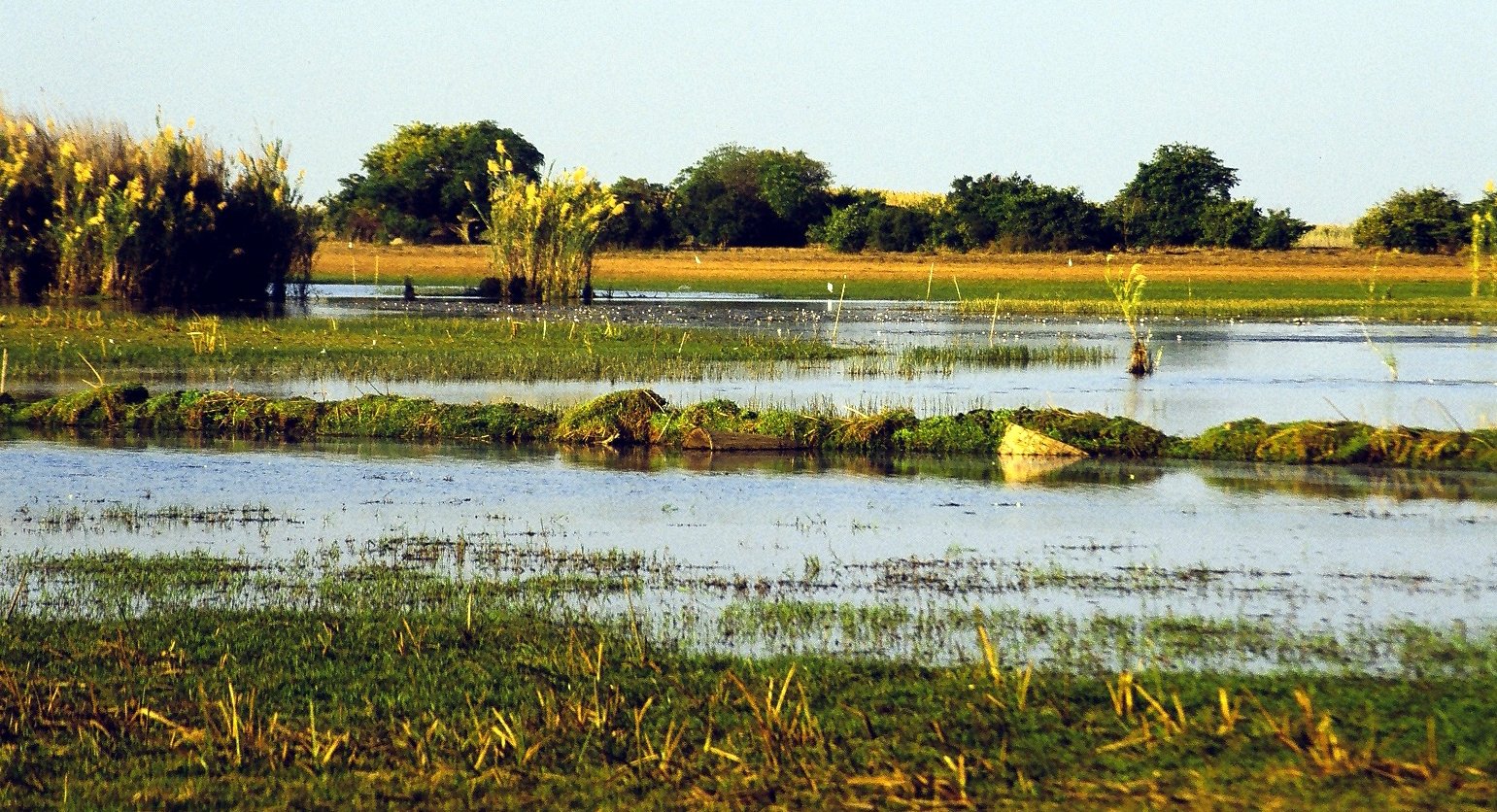
In the remote swamps of western Zambia, in the Mwinilunga district near the borders with Angola and the Democratic Republic of Congo, people speak of a creature that should not exist. It is called the kongamato, which in the local language means “breaker of boats”. It is said to be a flying creature, the size of a large eagle, with leathery, featherless wings, a long beak full of teeth, and a tail. It is said to attack fishermen, capsize their canoes, and leave terrible wounds. And it is said, by those who have seen it, to look exactly like a pterodactyl — an animal that has been extinct for sixty-six million years.
The book that named it
The kongamato entered the outside world’s knowledge through a book. In 1923, Frank Melland, a British colonial official working in what was then Northern Rhodesia, published “In Witch-Bound Africa”, an account of his years among the Kaonde people. In it, he described a creature the locals feared, a flying animal that haunted the Jiundu swamps and the Bangweulu wetlands.
Melland did something that has been argued over ever since. He showed the local people a book containing illustrations of prehistoric animals, including pterodactyls. The people, he wrote, identified the pterodactyl at once as the kongamato. They knew it. They had seen it. They said it was real, and dangerous, and that it attacked people in canoes.
The identification is the heart of the kongamato story, and also its greatest weakness. Did the people recognise a creature they knew, or did they simply pick the most frightening picture in the book? Melland believed the former. He was a careful observer, and he reported what he was told without embellishment. But the possibility of suggestion — that the picture supplied the answer — has hung over the case ever since.
What the witnesses describe
The descriptions collected over the following decades are consistent. The kongamato is said to have a wingspan of four to seven feet, a body covered in smooth, reddish-brown skin rather than feathers, and a long, narrow beak armed with teeth. It has a long tail, sometimes described as having a flap or diamond shape at the end. It flies low over the water, usually at dusk. It is said to be aggressive, swooping at people in canoes and at fishermen wading in the shallows.
The most disturbing part of the accounts is the wounds. Several reports describe people treated at mission hospitals for deep, slashing chest wounds that they said were inflicted by the kongamato. One well-known account, from the 1950s, tells of a man who was brought to a hospital with a deep wound across his chest, which he attributed to the creature. The wounds are part of what makes the kongamato different from other flying cryptids. It is not just seen. It is said to attack.
The creature is also said to be nocturnal, or at least most active at dusk and dawn, when the swamps are full of mist and the light is poor. That is also, of course, when misidentification is easiest.
The swamps
The Jiundu swamps and the Bangweulu wetlands are vast, remote and difficult to explore. The Bangweulu system alone covers thousands of square kilometres of shallow water, reeds, papyrus and floating vegetation, in a region with few roads and fewer visitors. It is one of the great wetland wildernesses of Africa, home to shoebills, sitatunga antelope, and hundreds of bird species. It is also, cryptozoologists argue, exactly the kind of place where an unknown animal could survive unnoticed.
That argument has force. The swamps are enormous, and they are very lightly studied. But they are also full of known animals that could be mistaken for a monster. The hammer-headed bat, Africa’s largest bat, has a wingspan of up to three feet and a face that, in poor light, looks distinctly prehistoric. The saddle-billed stork, one of the largest storks in the world, has a wingspan of up to nine feet, a long, heavy bill, and a habit of flying low over wetlands at dusk. A stork, seen against a dark sky by a frightened fisherman, could be a kongamato.
The pterosaur problem
The kongamato is usually described as a pterosaur, and specifically as resembling a rhamphorhynchus, a long-tailed pterosaur of the Jurassic period. That is a very specific identification, and it is a very difficult one to sustain. Pterosaurs were flying reptiles. They went extinct at the end of the Cretaceous period, sixty-six million years ago, along with the non-avian dinosaurs. There is no fossil record of any pterosaur surviving into the modern era, in Africa or anywhere else. A breeding population of large flying reptiles would leave bones, droppings, nests and, eventually, a carcass. None has ever been found.
The sceptical position is that the kongamato is a composite: real animals — bats, storks, herons — misidentified in poor light, combined with a genuine local fear of the swamps and their dangers. The swamps are dangerous places. Crocodiles, hippos, malaria and drowning kill people there every year. A monster that explains the danger, and gives it a name, is a natural product of a dangerous landscape.
The cryptozoological position is that the consistency of the descriptions, across decades and across a wide area, points to something real. The witnesses describe the same animal: featherless, toothed, long-tailed, aggressive. They describe it in the same places. And they describe wounds that, if the accounts are accurate, are hard to attribute to a bat or a stork.
A family of flying monsters
The kongamato is not alone. It belongs to a family of pterosaur-like cryptids reported around the world. In Papua New Guinea, the ropen is said to fly over the islands at night, a leathery, bioluminescent creature with a long tail. In Java, the ahool is a giant bat-like animal with a wingspan of ten feet. In Texas, there have been reports of a “big bird” with a pterosaur-like shape. The similarities between these reports are striking, and they are used by both sides of the argument. Cryptozoologists say the similarities point to a real, widespread animal. Sceptics say they point to a widespread human tendency to describe unknown flying things in the same way.
The ropen, in particular, has been investigated in some detail. Expeditions to Papua New Guinea in the 2000s found that the “ropen” lights were almost certainly the bioluminescent displays of insects, and the “ropen” itself was probably the large fruit bats of the region. The kongamato has never been the subject of a comparable expedition. The swamps of western Zambia are harder to reach, and harder to search, than the islands of Papua New Guinea.
The British cryptozoologist Karl Shuker, who collected kongamato reports through the 1990s and wrote about the creature in “In Search of Prehistoric Survivors” (1995), argued that the consistency of the accounts deserved a proper field investigation rather than dismissal. He noted that the Jiundu swamps, where most reports originate, are among the least explored wetlands in Africa, and that no systematic survey of their large fauna had ever been carried out. Shuker’s point was not that the kongamato is a pterosaur. It was that no one had ever looked properly, and that the absence of evidence was, in this case, largely an absence of searching.
Why the kongamato endures
The kongamato endures because the original account is unusually credible. Frank Melland was not a monster hunter. He was a colonial official writing an ethnographic book, and the kongamato was a small part of it. He reported what the Kaonde people told him, and he reported it carefully. The people he spoke to were afraid of the creature, and their fear was real, whether or not the creature was.
It also endures because the swamps are still there, still remote, and still largely unexplored. The Bangweulu wetlands remain one of the least visited wildernesses in Africa. Until someone searches them thoroughly, the kongamato will remain possible, in the way that all unsearched places keep their mysteries possible.
What is documented, and what is not
Documented facts: In 1923, Frank Melland published “In Witch-Bound Africa”, reporting that the Kaonde people of western Zambia feared a flying creature called the kongamato, meaning “breaker of boats”. The creature is reported in the Jiundu swamps and the Bangweulu wetlands of Zambia, Angola and the Democratic Republic of Congo. Witnesses describe a featherless, toothed, long-tailed flying animal with a wingspan of four to seven feet. No specimen, carcass, photograph or bone of the creature has ever been found. Pterosaurs have been extinct for 66 million years, with no fossil record of survival into the modern era.
Unverified or disputed claims: The claim that the kongamato is a surviving pterosaur rests on eyewitness identification, including the identification of pterodactyl illustrations by local people in Melland’s account — an identification that may have been suggested by the illustrations themselves. The claim that the creature inflicts deep wounds is based on hospital accounts attributed to it, none of them independently verified. The claim that the creature is an unknown animal has not been tested by a systematic search of the swamps. Plausible known-animal explanations include the hammer-headed bat and the saddle-billed stork, but neither has been proven to account for any specific sighting.