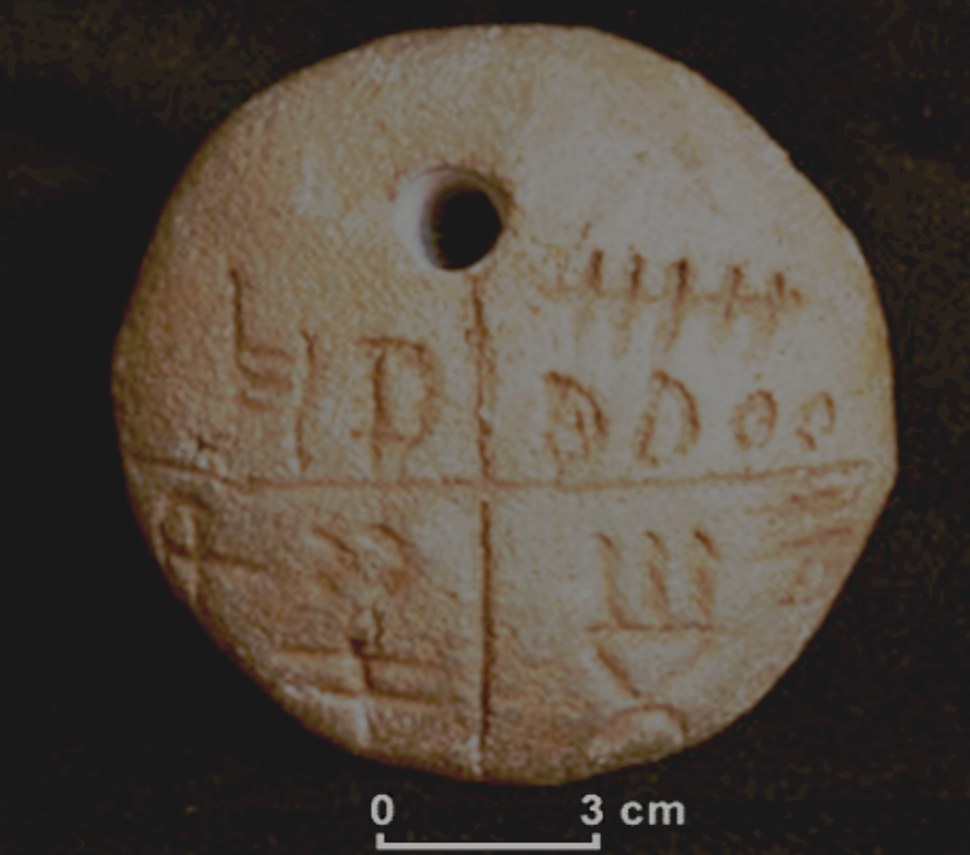
In the summer of 1961, on a low rise near the village of Tărtăria in Transylvania, a Romanian archaeologist named Nicolae Vlassa opened a pit that would haunt his discipline for more than sixty years. Inside, among burnt bones, clay figurines and a shell bracelet, lay three small tablets of unfired clay, each no longer than a thumb, each covered in incised signs. If the signs were what some scholars claimed they were, then writing had not been invented in Mesopotamia, as every textbook said. It had been invented in Neolithic Europe, more than a thousand years earlier. The claim was extraordinary. The evidence, then as now, is anything but settled.
The village of Tărtăria lies in Săliștea commune, about thirty kilometres from Alba Iulia, in the heart of Transylvania. Vlassa, an archaeologist at the National Museum of Transylvanian History in Cluj-Napoca, was excavating a Neolithic settlement there when his team reportedly uncovered the tablets in a pit, together with twenty-six clay and stone figurines, a shell bracelet, and the burnt, broken and disarticulated bones of an adult. The pit looked like a ritual deposit or a cremation burial, a place where objects had been deliberately placed rather than casually discarded. That context mattered enormously, because it was the context — not the tablets themselves — that would supply their date.
Three Small Tablets
The tablets themselves are modest objects. Made of unbaked clay, they measure roughly six to ten centimetres in length. One is round, pierced with a hole as if it were meant to be worn or hung, and divided into sections filled with signs. The other two are rectangular. Vlassa interpreted one tablet as a hunting scene and the other two as a kind of primitive writing, comparable to the early pictograms of the Sumerians. The signs belong to a wider family of marks known as the Vinča symbols, incised marks found on pottery and other objects across the Neolithic Vinča culture of the Balkans, a culture that flourished roughly between 5700 and 4500 BCE and is known for sophisticated pottery, figurines and settlements.
Vinča symbols had been known since the late nineteenth century, when the Hungarian archaeologist Zsófia Torma excavated them at Turdaș, another Transylvanian site. By 1961, hundreds of such signs had been recorded on pots, spindle whorls and figurines. Nobody had deciphered them, and nobody had agreed on what they were. Some scholars saw them as property marks, or tallies, or symbols of ownership. Others saw religious signs. Vlassa’s tablets were different because they carried the signs in groups, arranged on a surface that looked like it had been made to carry a message. That arrangement is what turned a familiar curiosity into a world-changing claim.
A Date That Changed Everything
At first, the tablets seemed old but not impossibly old. Serbian and Romanian archaeologists of the time believed the Vinča culture had originated around 2700 BCE. That already made the tablets older than the first Minoan writing, the oldest known writing in Europe. Then radiocarbon dating changed the picture. Charcoal and other material from the pit, and from the wider Tărtăria site, returned dates of around 5500 BCE, and dates from associated finds were later interpreted as suggesting an age of roughly 5300 BCE. If those dates truly belonged to the tablets, they predated the proto-cuneiform writing of Uruk in Mesopotamia — generally dated to around 3400 to 3200 BCE — by more than two thousand years.
The implications were enormous. Writing is generally thought to have been invented in Mesopotamia to serve the administrative needs of early cities: to record grain, livestock and labour. If the people of Neolithic Transylvania had been writing two millennia earlier, without cities, without kings and without bureaucracies, then the standard story of civilisation would need rewriting. Some scholars embraced the idea. Others were deeply sceptical, and their scepticism focused on the weakest link in the whole case: the context of the discovery.
The Problem of Context
In archaeology, an object is only as securely dated as the layer of earth it came from. Vlassa, by most accounts, never published a full account of the stratigraphy of the pit, the precise layering of soil and deposits that would show the tablets really belonged with the material that was radiocarbon dated. Some scholars have disputed whether the tablets were actually found at the reported depth at all, suggesting they may have been an intrusion from the upper, later strata of the site — objects that fell or were pushed down into an older layer long after they were made. The authenticity of the engravings themselves has also been disputed from the beginning.
Then came a second blow. After the excavation, workers in the conservation department of the Cluj museum baked the originally unbaked tablets in order to preserve them. The heat treatment made it impossible to radiocarbon date the tablets directly, since the organic material in the clay that might have been dated was destroyed or contaminated. The one test that could have settled the argument was lost before it could be performed. Every date attached to the tablets since then has been a date by association — a date for the pit, or the site, or the culture — and association is exactly what the sceptics question.
A further claim of forgery has circulated since the discovery. It rests on the observation that some of the signs on the tablets resemble reproductions of Sumerian symbols that appeared in popular Romanian literature available at the time of the excavation. The suggestion is that the signs could have been copied from a book rather than inherited from the Neolithic. This claim has never been proven, and it is not accepted by all scholars, but it has kept the controversy alive, because it offers a simple explanation for why Neolithic signs should look so much like Mesopotamian ones.
Writing, or Something Else?
Even if the tablets are genuinely Neolithic, a second question remains: are the signs writing at all? Writing, in the strict sense, is a system of signs that represents language — sounds, words or syllables — in a way that a reader who knows the system can recover. The Vinča symbols have never been deciphered, and no bilingual text exists that could anchor a reading. Analyses of the symbols have shown that they have little similarity with Near Eastern writing, which suggests that if they are writing, they arose independently of the Sumerian system rather than being borrowed from it.
Most scholars today take a cautious position. Many agree that the Vinča symbols are a form of proto-writing at most: a system of signs that carried meaning — perhaps marking ownership, identity, ritual or quantity — without necessarily encoding spoken language in full. Others go further and argue that it is unlikely the Vinča symbols represent a writing system at all. The symbols appear in short groups, rarely in long sequences, and they do not show the regular patterns of repetition and variation that linguists expect from true writing. A handful of signs on a small tablet, however tantalising, is a long way from a text.
The debate, in other words, is not only about what the signs mean, but about when the whole Vinča culture flourished, a question that radiocarbon dating has complicated rather than resolved.
Why the Tablets Still Matter
The Tărtăria tablets matter even if they are not the world’s oldest writing. They are a reminder of how much the Neolithic Balkans achieved, and how easily a modern story can be built on a fragile foundation. The Vinča culture built large settlements, made fine pottery, worked copper and carved figurines of striking sophistication. Its people marked their objects with signs whose meaning we cannot recover, and that failure is itself a kind of evidence: a reminder that the people of the past had systems of meaning that did not survive them, and that not every mark is a message we can read.
The tablets also illustrate a recurring pattern in archaeology. A spectacular claim attracts attention, funding and headlines. The careful work of checking the claim — the stratigraphy, the dating, the comparison with other finds — takes decades, and it rarely produces a headline of its own. In the case of Tărtăria, the checking is still unfinished. The tablets sit in a museum, small and unassuming, while the argument about them continues in journals and conferences. They may be the earliest writing in the world. They may be ritual objects whose signs meant something entirely different. They may be later intrusions, or even modern additions. The honest answer, more than sixty years after Vlassa opened that pit, is that we do not know.
That uncertainty is not a failure. It is the point. The Tărtăria tablets force us to ask what counts as evidence, how much weight a single find can bear, and how willing we are to rewrite history on the strength of three small pieces of clay. Until the questions of context and meaning are answered, the tablets will remain what they have always been: one of archaeology’s most tantalising mysteries, and one of its most instructive cautionary tales.
What Is Known — and What Is Not
Documented facts: Three inscribed clay tablets were reportedly discovered in 1961 at Tărtăria, Romania, by a team led by Nicolae Vlassa of the National Museum of Transylvanian History, Cluj-Napoca, in a pit also containing clay and stone figurines, a shell bracelet and burnt human bones. The tablets are made of unfired clay, roughly six to ten centimetres long, and bear incised signs belonging to the Vinča symbols corpus, known since the nineteenth-century excavations at Turdaș. Radiocarbon dates from associated material at the site were interpreted as suggesting an age of around 5500 to 5300 BCE. Museum conservation staff baked the tablets after discovery, making direct radiocarbon dating of the tablets themselves impossible. The meaning of the Vinča symbols is unknown, and they have never been deciphered.
Unverified or open to interpretation: The claim that the tablets represent the world’s earliest writing is disputed and unproven. Whether the tablets really came from the Neolithic layer in which they were reported, or were intrusions from later strata, is disputed, and Vlassa never published a full stratigraphic account. Claims that the signs were forged or copied from published Sumerian reproductions are allegations, not established fact. The idea that the signs encode spoken language, rather than serving as tallies, property marks or ritual symbols, is a hypothesis. Most scholars consider it unlikely that the Vinča symbols constitute a true writing system.