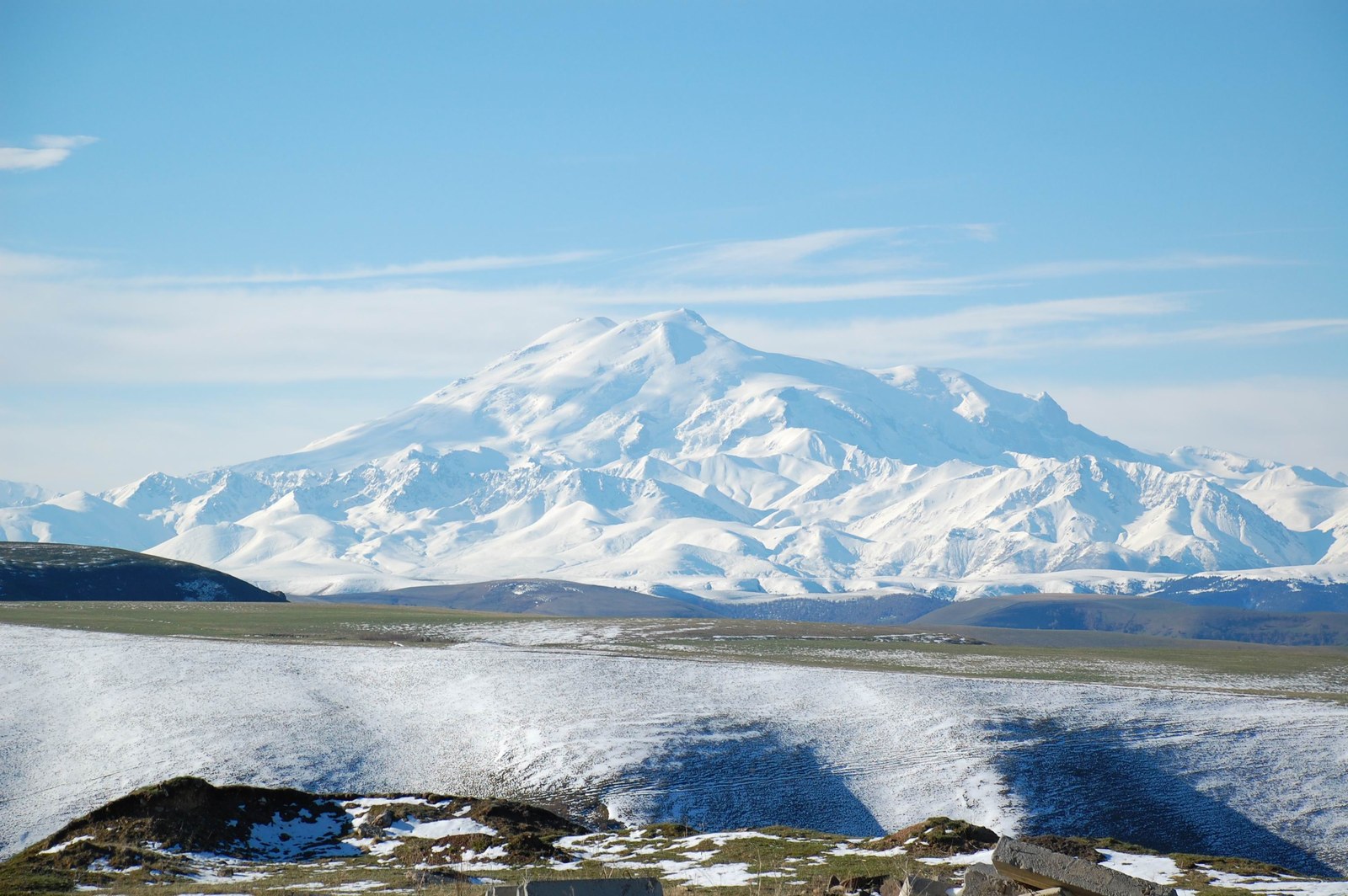
In the high valleys of the Caucasus, where the Kuban and Terek rivers rise toward the central peaks, the herders and hunters of the Kabardin, Balkar, Karachay and Chechen peoples have a tradition that long predates the arrival of Russian rule. They speak of a hair-covered humanoid, a being not quite human and not quite animal, who lives in the forested gorges and rocky meadows of the high country and sometimes ventures down to the farms in the hours before dawn. He is called the Almasty in the Turkic languages of the region. To the south, on the steppes of Mongolia, his cousins are called the almas. Together they form one of the most persistent “wild man” traditions in the world — and one of the few that serious scientists, including researchers at the Soviet Academy of Sciences, spent decades investigating.
The Almasty is usually described as roughly the height of a tall man, sometimes slightly taller, with a stocky build, broad shoulders, and arms that reach somewhat below the knees. His body is covered with dark or reddish-brown hair, while his face, palms and soles are bare. Witnesses describe a pronounced brow ridge, a flat nose and a weak chin — features that, to the scientists who studied the reports, sounded less like an ape than like an archaic human. That resemblance is the heart of the Almasty mystery: if the creature exists, it may not be a monster at all, but a survivor.
Centuries of Reports
Written accounts of the Almasty go back to the fifteenth century. The Bavarian traveller Hans Schiltberger, writing of his travels in the early 1400s, recorded his own observation of such creatures during his time as a prisoner of the Mongol Khan. In 1871 the Russian explorer Nikolai Przhevalsky reported seeing the animals in Mongolia. These early accounts are brief and hard to verify, but they show that the tradition was already old when Europeans first wrote it down.
The reports continued through the twentieth century. In 1963 the Russian researcher Ivan Ivlov reported observing a whole family group of almas, an account later described by the British anthropologist Myra Shackley in her book Still Living? (1983). During the 1950s and 1960s, Kabardino-Balkaria in the central Caucasus emerged as a hotspot for Almasty reports, with shepherds describing human-like creatures standing five to six feet tall, covered in thick hair “like a bear, but shaped like a person”. The Almasty was also said to enter barns and stables at night, to take fodder and vegetables from gardens, to wash in streams, and to sleep in haystacks. Some reports told of an Almasty riding horses around enclosed pastures — a strange detail, but one that recurs often enough in local oral tradition to be a genuine motif rather than a single invention.
The Soviet Investigations
What sets the Almasty apart from most cryptids is that it was investigated, at length, by professional scientists. After the Second World War, reports collected from soldiers returning from the Caucasus drew the attention of the historian Boris Porshnev, who held a chair at the Soviet Academy of Sciences. Porshnev came to believe that the Almasty represented a surviving population of Neanderthals, or of a closely related archaic hominid. In 1963 he published The Current State of the Question of Relict Hominoids, a substantial monograph that drew together Almasty reports with material from the Mongolian almas and the Siberian Chuchunya.
The most thorough fieldwork was done by Marie-Jeanne Koffmann, a French-born physician who served in the Caucasus during her medical career. Over decades of fieldwork in Kabardino-Balkaria, she collected Almasty reports directly from local informants, in their own languages, and built up a remarkably detailed dossier. Her work, published principally in French and Russian, remains the single most thorough modern documentation of the tradition. Koffmann also recorded a report from the winter of 1941, shortly after the German invasion of the Soviet Union, in which Red Army soldiers in Dagestan were said to have encountered a creature about five feet nine inches tall, with a human-like build, bare feet, and dark brown hair covering its chest, back and shoulders.
The physical evidence collected by Koffmann and others was suggestive without being conclusive. Tracks were recorded and photographed. Hair samples collected from sites of reported encounters were analysed at Soviet and later Russian institutes, with inconclusive results. No skeleton, no body, and no living specimen has ever been produced.
The Case of Zana
The most famous single Almasty account concerns a wild woman called Zana, said to have been captured in the mountains in the 1850s near the village of Tkhina in Abkhazia, about fifty miles from Sukhumi. According to the tradition, Zana was covered in hair, at first violent towards her captors, but gradually domesticated. She learned to perform simple household chores and had several children with local men. For more than a century she was cited as possible proof that the Almasty was real — a living specimen, hiding in plain sight in a mountain village.
The case was finally tested with modern science. A DNA study published in 2015, which analysed genetic material from Zana’s descendants, concluded that she was a fully human woman of sub-Saharan African descent. The result fits a sadder and more ordinary explanation: Zana was probably a human being, perhaps descended from enslaved people brought to the region, whose appearance and behaviour were misunderstood by the villagers who captured her. Her story remains important, but as a cautionary tale about how folklore can grow around a vulnerable person, not as evidence for a wild man.
Why Scientists Took It Seriously
The Almasty is one of the few cryptids that mainstream scientists have treated as a question worth asking rather than a story worth dismissing. The reasons are straightforward: the reports are numerous, they come from many independent witnesses over several centuries, they are unusually consistent in their description, and they were collected by trained fieldworkers rather than by enthusiasts. The Soviet investigations were genuine science, conducted by credentialed researchers who published their work and invited criticism.
But the investigations also show why the Almasty remains unproven. A breeding population of large hominids would need to number in the hundreds at least, and would leave traces: bones, droppings, feeding signs, and eventually a body. None has ever been found. Hair samples have never matched an unknown species. The most detailed fieldwork in the world produced a dossier of stories, not a specimen. Most mainstream scientists therefore consider the Almasty a purely legendary creature, while acknowledging that the tradition itself — and the reasons people report it — is a genuine subject for anthropology.
The Almasty endures because it sits on the border between folklore and science. It is a story told by shepherds and recorded by professors, a creature of the high valleys that has never once been caught on camera, measured, or examined. Until one is, it remains what it has always been: a wild man of the mountains, real in the telling, unproven in the flesh.
What Is Documented, and What Is Not
Documented: The Almasty (Mongolian almas, “wild man”) is a long-standing tradition of the Caucasus, Pamir and Altai regions; written accounts go back to Hans Schiltberger in the early 1400s and Nikolai Przhevalsky in 1871; Ivan Ivlov reported a family group in 1963, described by Myra Shackley in Still Living? (1983); Boris Porshnev published a monograph on relict hominoids in 1963; Marie-Jeanne Koffmann conducted decades of fieldwork in Kabardino-Balkaria and recorded a reported 1941 encounter in Dagestan; Zana of Tkhina was reportedly captured in the 1850s and lived in a village in Abkhazia; a DNA study published in 2015 concluded from her descendants’ DNA that Zana was a human woman of sub-Saharan African descent; hair samples collected from encounter sites have been analysed with inconclusive results.
Unverified: That the Almasty exists as a living species. No specimen, skeleton, photograph or DNA sample of an unknown hominid has ever been produced. The reported descriptions are consistent, but consistency in eyewitness reports is not proof of a real animal, and the absence of any physical remains after centuries of reports is the strongest argument against the creature’s existence. The Zana case, long cited as the best evidence, has been resolved by DNA as a human story.
Sources
- https://en.wikipedia.org/wiki/Almas_(cryptozoology)
- https://spookyvalley.com/events/almasty-caucasus-wildman/
- https://sasquatchchronicles.com/almas-the-wild-man-of-russia/
- https://www.biologyonline.com/articles/almas