Africa has more than its share of water monsters, and most of them are variations on a theme: a long neck, a humped back, a ripple on the surface of a lake. The dingonek is not one of those. It is a different kind of animal altogether, and a stranger one. It is described as a scaly, tusked water beast, fifteen feet long, with a spotted back as wide as a hippopotamus, long claws, a broad tail, and a massive head whose jaws carry a huge pair of projecting tusks like a walrus. The Wa-Ndorobo people of East Africa call it the dingonek. Western writers have called it the jungle walrus. It has been reported exactly once by a Western eyewitness, in 1907, and that single sighting has kept it in the cryptozoological literature for more than a century.
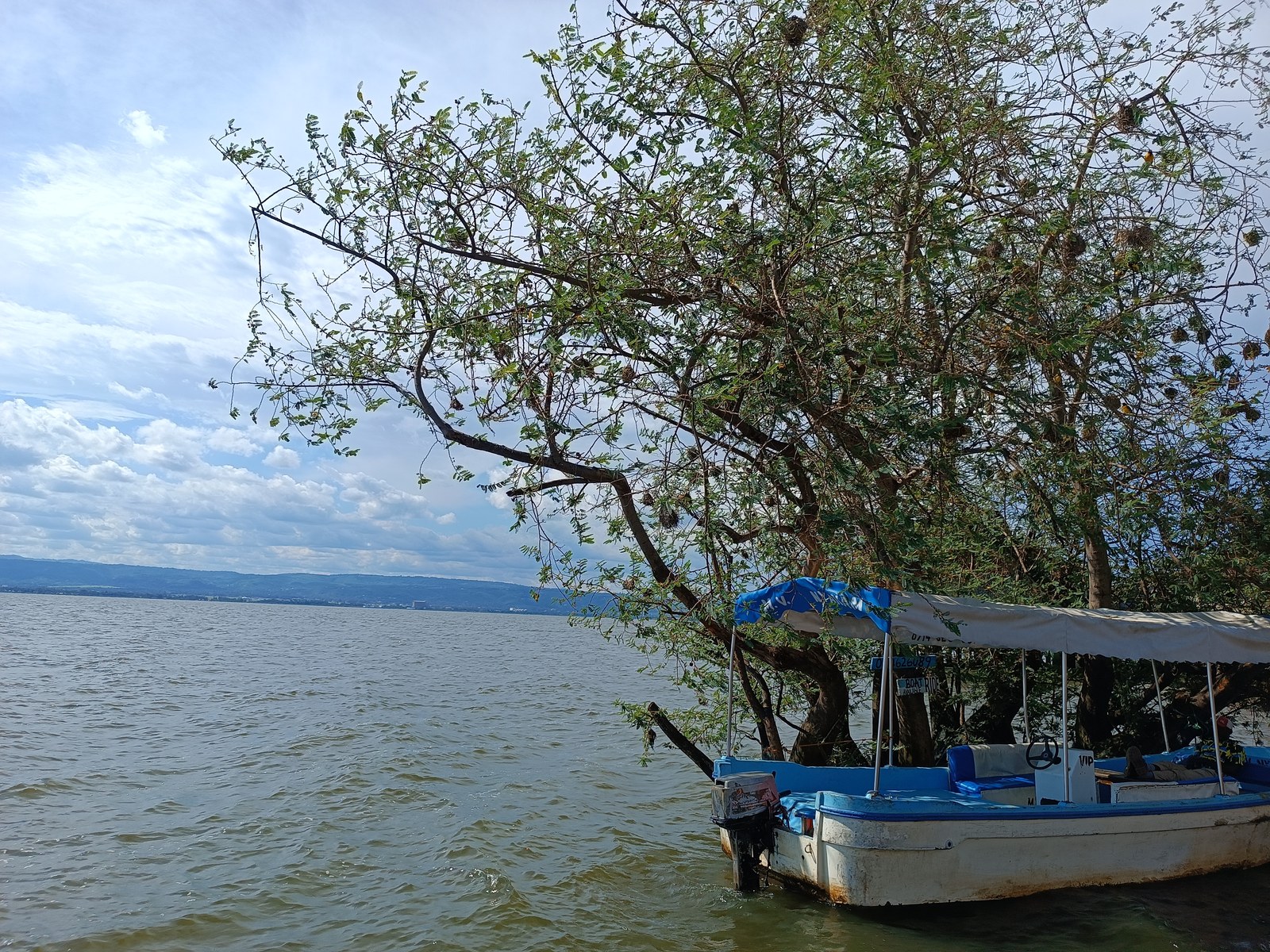
The dingonek lives, according to the tradition, in the rivers and lakes of East Africa, in the waters that run into Lake Victoria, the largest lake on the continent. Lake Victoria is a shallow, warm, green lake, full of fish and crocodiles and hippopotamuses, and its shores have been inhabited for thousands of years. The rivers that feed it — the Migori, the Mara, the Kagera — run through swamp and forest, and their banks are places where a large animal could live without being seen often. The dingonek is said to be one of those animals, and to be dangerous: it attacks boats, it overturns canoes, and it does not run from people.
The 1907 encounter
The dingonek’s most famous Western eyewitness was an explorer and big-game hunter called John Alfred Jordan. In 1907, Jordan was on the River Migori, which runs into Lake Victoria from the east, in what is now Kenya. He saw an animal in the water, and he shot at it, and missed. What he described afterward is the foundation of the dingonek literature, and it is worth quoting in full, because everything else in the case is commentary on it.
Jordan described an animal four and a half to five and a half metres long — fifteen to eighteen feet — covered in scales, with a spotted back as wide as a male hippopotamus. It left footprints the size of a hippopotamus’s, but it also had long claws, a broad tail, and a massive head. Its jaws carried a huge pair of projecting upper tusks, like a walrus. He called it, in his own words, a cross between a scaled dragon and a tiger. He did not kill it, and he did not see it again.
Jordan was not a fabulist. He was a working hunter and explorer, a man who knew the animals of East Africa, and he was careful to say what he had seen and what he had not. He did not claim the animal was a dinosaur, or a monster, or anything supernatural. He described a large, scaly, tusked water animal, and he left it at that. The cryptozoologists who came after him did the rest.
The older tradition
Jordan was not the first to describe the dingonek. The Wa-Ndorobo, the people of the region, had a name for it long before any European arrived, and they described it in the same terms: a large water beast with tusks, scales and a spotted back, living in the rivers and swamps. The animal is also called ol-umaina in some accounts, and it belongs to a family of similar water beasts reported across Africa: the mourou n’gou, the “water leopard”, in the Central African Republic; the coje ya menia, the “water lion”, in Angola; and the simba ya mail, another “water lion”, in the Democratic Republic of Congo. All of them are described in similar terms — large, spotted, tusked, aquatic — and all of them are reported from rivers and lakes where crocodiles and hippopotamuses already live.
There is also older evidence, of a kind. At Brackfontein Ridge, in what was then the Orange Free State of South Africa, there is an ancient cave painting that depicts an unidentified creature bearing a remarkable resemblance to a walrus, including long downward-curving tusks. The painting is old, and no one knows what animal it was meant to show. Karl Shuker, the British cryptozoologist who has written more about the dingonek than anyone else, has pointed to it as possible evidence that a walrus-like animal once lived in southern Africa, and may still live in the north. It is a suggestive image, and it is also, on its own, nothing more than a painting of an animal no one can identify.
What the witnesses describe
The descriptions of the dingonek are consistent, and they are strange in a way that sets the animal apart from other African cryptids. It is said to be up to twelve feet long in some accounts, and up to eighteen feet in Jordan’s. It is covered in scales, with a mottled, spotted back, and its skin is described as a clash of textures — scaly in some accounts, furred in others. It has a long horn in some versions of the story, sabre-like canines in others, and a tail that ends in a fin, or in a sting. Its most distinctive feature, in every account, is the pair of tusks: long, curved, walrus-like teeth that project from its upper jaw.
It is also said to be aggressive. The dingonek is reported to attack boats and canoes, to overturn them, and to kill the people in them. It is said to leave hippo-sized footprints on riverbanks, and to have long claws that mark the mud. It is a water animal, but it is not a shy one. It defends its stretch of river, and it does not back down.
The theories
The most dramatic theory about the dingonek comes from Bernard Heuvelmans, the founder of cryptozoology, who boldly speculated that the dingonek and its relatives might be living sabre-tooths — prehistoric cats that had become secondarily aquatic, taking to the water as their habitat changed. It is a striking idea, and it fits the description in some respects: a large, spotted, tusked predator, living in rivers, with long claws and a massive head. But there is no fossil evidence for an aquatic sabre-tooth in Africa, and no living sabre-tooth of any kind has ever been found. Heuvelmans’s theory is a speculation, and it has remained one.
A more modest theory is that the dingonek is a misidentified known animal. A large Nile crocodile, seen at dusk, could look scaly and spotted and tusked, if what the witness was seeing was a crocodile’s teeth. A hippopotamus, half-submerged, could look like a massive, tusked water beast. A monitor lizard, grown to unusual size, could account for the scales and the claws and the tail. Jordan knew all of these animals, and he was certain he had not seen any of them, but certainty is not evidence, and a single sighting, however careful, is not a specimen.
A third possibility is that the dingonek is a composite: the Wa-Ndorobo tradition, Jordan’s sighting, the cave painting, and the other water-beast stories of Africa, all folded together into a single animal that never existed in the form described. The tradition is real, and the sighting is real, and the painting is real, but they may not be the same thing. The dingonek may be several animals, and several stories, wearing one name.
The sceptical view
No body, no skeleton, no photograph, no DNA sample and no verified footprint has ever established the existence of the dingonek. That is the hard fact at the centre of the story, and it has not changed since 1907. Everything known about the animal comes from a single Western sighting and from local tradition, and the local tradition is oral, not written, and has never been independently verified.
Sceptics point out that Lake Victoria and its rivers are among the most heavily fished and travelled waters in Africa. They are full of fishermen, and the fishermen know their waters. A fifteen-foot, tusked, scaly animal that attacked boats would be seen often, and would leave remains. None has ever been found. The most likely explanation, on the evidence available, is that Jordan saw something he could not identify — a crocodile, a hippopotamus, a trick of the light on the water — and that the story grew in the telling, fed by a local tradition that already had a name for a water monster.
Why the story endures
The dingonek endures because Jordan’s account is so specific, and so hard to dismiss. He gave measurements. He gave a location. He described the animal in terms that do not match any known species, and he did so without embroidery. He did not claim a dinosaur. He did not claim a monster. He described what he saw, and what he saw was strange.
And it endures because Lake Victoria is still there, and its rivers are still there, and the water is still dark, and the banks are still lined with reeds, and a person standing on the bank at dusk can still imagine something large moving under the surface. The dingonek may not be real, but the river is, and the fear is, and that is enough to keep the story alive.
What is documented, and what is not
Documented facts: In 1907, the explorer and hunter John Alfred Jordan reported seeing and shooting at a large, scaly, tusked water animal in the River Migori, which flows into Lake Victoria in Kenya. He described it as 4.6 to 5.5 metres long, with a spotted back as wide as a male hippopotamus, long claws, a broad tail, and a massive head with a huge pair of projecting walrus-like upper tusks. The Wa-Ndorobo people of the region have a long-standing tradition of a water beast called the dingonek, also known as ol-umaina. An ancient cave painting at Brackfontein Ridge in South Africa depicts an unidentified walrus-like creature with long downward-curving tusks. No body, skeleton, photograph or DNA sample of the dingonek exists.
Unverified or disputed claims: That a fifteen-foot, scaly, tusked water beast lives in the rivers flowing into Lake Victoria rests on a single Western sighting from 1907 and on oral tradition, neither independently verified. That the animal attacks boats and overturns canoes is part of the tradition, not a documented event. That the Brackfontein Ridge painting depicts a dingonek is an interpretation, not a finding. Bernard Heuvelmans’s suggestion that the dingonek is a living sabre-tooth that became secondarily aquatic is speculation, with no fossil evidence to support it. The claim that the scales were clumps of wet fur, making the animal a mammal, is a hypothesis, not an observation.
Sources
- https://www.goodreads.com/author/show/271954.karl_shuker/blog?page=56
- https://encounteratlas.com/creatures/
- https://www.theconfessionalspodcast.com/the-blog/2024/8/9/blog-10-lesser-known-cryptids-youve-probably-never-heard-of
- https://en.wiktionary.org/wiki/dingonek