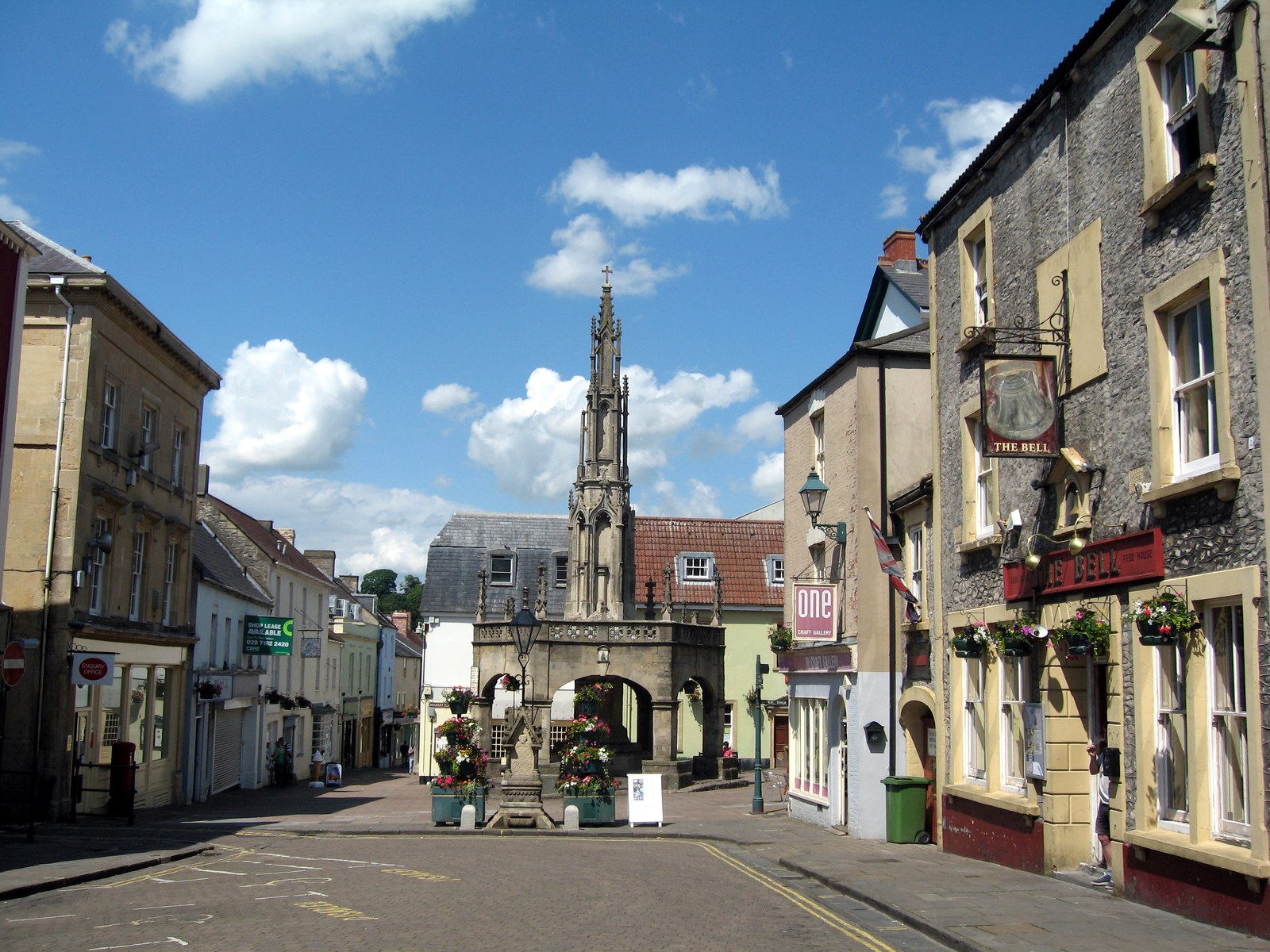
It is one of Britain’s oldest unsolved mysteries, and it is also one of the strangest, because the man who vanished could not walk. Owen Parfitt was about seventy years old, grey-haired, stout, and five feet seven inches tall. A stroke had left him partially paralysed, and for six months or so before his disappearance he had been, in the words of a later account, “a complete cripple”, unable to move without being carried. He lived in Shepton Mallet, a small town in Somerset, cared for by his sister, who was herself elderly. On a summer evening in June 1768, his sister and a neighbour girl carried him out to a chair in the little garden of the cottage, wrapped him warmly, and left him there while they went indoors. About half an hour later, the chair was empty. His greatcoat lay folded on it. Owen Parfitt was never seen again.
The case has been retold for more than two hundred and fifty years, in books, articles, and folklore collections, and every retelling adds a little varnish. But the core of the story is consistent, and it is the core that is so hard to explain: a man who could not walk unaided disappeared from a chair, in a garden, in a town full of people, in half an hour, without a sound.
The tailor who went to sea
Owen Parfitt was born around 1713, into a family of tailors in Shepton Mallet. He was apprenticed to his father at an early age and, by one account, was quite adept at sewing. But the quiet life of a tradesman did not hold him. As a young man he disappeared from Shepton Mallet — the first of his two disappearances — and when he returned years later he was a different man: bent and crippled with wounds and rheumatism, unrecognisable to anyone but his sister. The family story, as it was later told, was that he had gone to sea and lived a life of adventure. Whether that is true is impossible to say; it comes from the same chain of retellings as everything else about him.
What is better documented comes from the depositions taken decades later, when the case was reopened. Owen had no annuity or property, “but might have had a little money by him”. He was looked after when he grew old and infirm by his sister, who lived with him and was allowed a small sum by the parish for her trouble. He had been ill for some time before his disappearance, and had asked one witness’s father to take the sacrament with him. He was generally considered “of a fair character”, in the words of one deponent — “neither a very good man nor a very bad man” — though another witness had heard that he was “occasionally violent”. The most reliable of the deponents, a woman named Joanna Mills, described him as about seventy, grey-haired, five feet seven, and stout, and said he had been a complete cripple for six months or so.
The evening in the garden
The account that has come down to us was written by Andrew Lang, the Scottish folklorist, in the early twentieth century, drawing on the depositions and on local tradition. On the afternoon of a June day in 1768, Owen Parfitt, dressed in the night clothes he always wore, with an old greatcoat over his shoulders, took up his usual position in the little garden. His sister engaged a girl called Susannah Snook, who lived about fifty yards away, to help her carry him out. Between them they carried him along the passage to a chair placed, if the weather was fine, outside the house door, and there they left him, warmly wrapped up, while his bed was made and his room put tidy.
It was haymaking season, and the fields around the cottage were filled with people, and the turnpike road opposite would have had carts and horsemen passing up and down. No one seems actually to have seen him or spoken with him after he was settled in the chair. In about half an hour, the news reached his sister that Owen had disappeared. Susannah flew back to the cottage and found his sister weeping. The chair was just as they had left it, but with no trace of Owen save the greatcoat lying on the back.
The alarm given, the neighbours made a thorough search of both town and country for some distance around, even of the most unlikely spots, and the hunt did not cease even during a sharp thunderstorm, going on all that night and the next day. Neither then nor later was any trace ever found of Owen Parfitt.
The bones, the lawyer, and the doubts
The story did not end with the search. About fifty years later, in 1813, work near the site of the Parfitts’ cottage uncovered part of a human skeleton under a wall. For a time, people thought the mystery was solved — here, at last, was the crippled old man. But on closer inspection the skeleton turned out to be that of a female, and the hope collapsed. A year later, in 1814, a lawyer named William Maskell decided to reopen the case, taking depositions from the surviving witnesses. The statements contradicted one another, and the case was closed again, unsolved.
Modern historians are cautious about the whole affair. The date itself is uncertain: some accounts say June 1768, others say 1763, and the records disagree. The details — the sister’s name, the helper’s name, the exact sequence of events — vary between tellings. Surviving eighteenth-century documentation is scarce, and most modern retellings rely on secondary sources rather than contemporary records. The story as we have it was assembled decades after the event, from the memories of old people, and it has been embellished through more than two centuries of retelling.
That does not mean nothing happened. Something happened to Owen Parfitt in the 1760s, in Shepton Mallet, and it was strange enough that the town remembered it for fifty years and a lawyer thought it worth reopening. The likeliest mundane explanations are unglamorous: that Parfitt, despite his paralysis, managed to move himself somewhere and died, and his body was never found; or that he was murdered and his body hidden, perhaps for the little money he was thought to have; or that the story as told is a garbled version of a simpler event — a confused old man wandering off, or being taken away by someone, and dying unrecorded. None of these can be proved, and none of them explains the empty chair in a crowded garden in half an hour. The neighbours at the time had their own explanation: they believed he had been carried off by demons. It was, given what they had seen, hardly an unreasonable conclusion.
What is documented, and what is not
Documented facts: Owen Parfitt (c. 1713 – disappeared 1768) was an Englishman from Shepton Mallet, Somerset, whose unexplained disappearance is considered one of Britain’s oldest unsolved mysteries. According to the traditional account, he was about seventy, grey-haired, about five feet seven inches tall, and partially paralysed after a stroke, dependent on his sister for care. On a summer evening in June 1768, he was carried out to a chair in his sister’s garden by his sister and a neighbour girl, Susannah Snook; when they returned a short time later, he had vanished, leaving his greatcoat on the chair. A thorough search of the town and countryside found no trace of him. In 1813 a skeleton found near the cottage proved to be female, not Parfitt’s. In 1814 a lawyer, William Maskell, reopened the case and took depositions; the witness statements contradicted one another and the case was closed unsolved.
Unverified or disputed claims: The date of the disappearance is uncertain — some accounts say June 1768, others say 1763. The details of Parfitt’s early life, including the story that he ran away to sea as a young man and returned crippled, come from later retellings and have not been independently verified. The names of the sister and the helper vary between accounts. The claim that Parfitt vanished “in full view of witnesses” is an embellishment: the traditional account says no one actually saw him after he was settled in the chair, though the fields and road were busy. The contemporary belief that he was carried off by demons is folklore, not evidence, and the mundane explanations — that he moved himself and died undiscovered, or was murdered for money — are unproven.