There is a figure at the edge of the world, in the coldest inhabited country on Earth, and the people who live there have known about him for longer than anyone can say. The Yakut call him chuchunya, sometimes spelled chuchunaa. The Evenk, their neighbours in the taiga, call a similar figure mulen. He is tall, sometimes very tall, covered in dark hair from the shoulders down, and dressed in skins or roughly stitched fur. He runs with a peculiar lurching gait, fast enough to outpace a reindeer over open ground. He avoids settlements, but he is sometimes seen at the edge of a fishing camp or on the margin of a summer pasture, watching from the tree line and retreating without a confrontation. He is Siberia’s wild man, and he has been reported, by indigenous hunters and by Russian explorers alike, for nearly two hundred years.
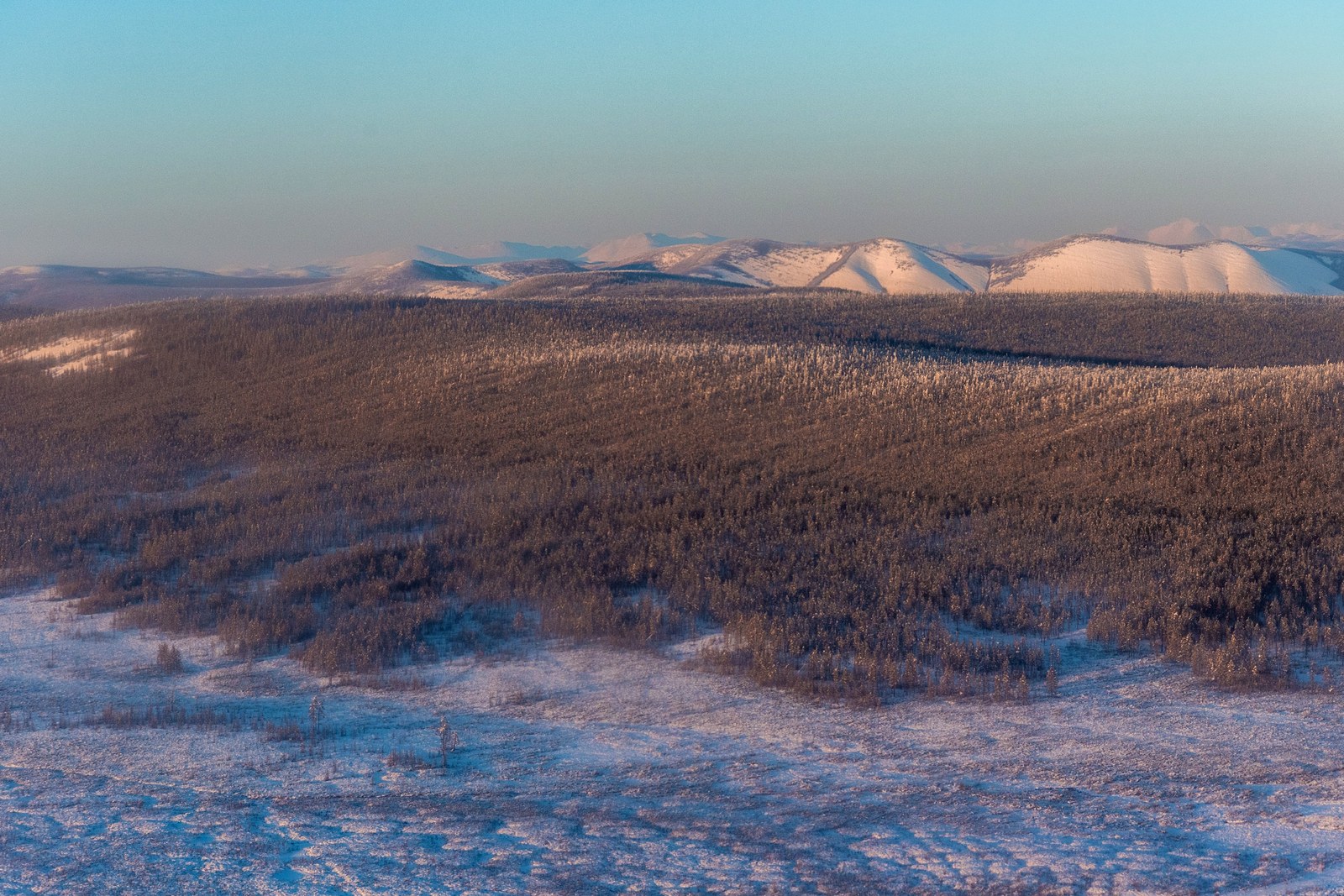
Yakutia, the Sakha Republic, is a land the size of India with fewer than a million people in it. Its winters last for eight months, and the temperature can fall below minus sixty degrees. The taiga — the great northern forest — stretches to the horizon, broken by the wide rivers that are the region’s only roads: the Lena, the Indigirka, the Yana. It is a country where a person can walk for days without seeing another human being, and where the forest keeps its own counsel. A wild man could live there. That, at least, is what the stories say.
The earliest Russian accounts
The first documented Russian-language references to the chuchunya come from the nineteenth century, when Russian explorers and ethnographers began to travel the Arctic coast of Siberia in earnest. In the 1840s and 1850s, expedition members under Pyotr Anjou and others noted that the native peoples of the region told of a tall, hair-covered figure that lived on the tundra. The accounts were brief, and the explorers treated them as folklore, but they wrote them down, and the figure kept appearing in the record.
More substantial documentation came in the early twentieth century, when Soviet anthropologists conducting surveys in the Sakha Republic recorded detailed accounts from Yakut and Yukaghir informants. The geologist P. L. Dravert, working in the 1920s, published several reports collected from local people. The figure they described was about two metres tall, sometimes more, with a low forehead, prominent brow ridges, and powerful arms. He wore animal skins. He had, some said, a white patch of fur on his forearms. He was well built, more like a Neanderthal than an ape, and he carried himself like a man.
In 1928, the Soviet authorities sent an expedition to gather information about the chuchunya near the Indigirka and Yana rivers. Dravert collected more than forty accounts. The following year, in 1929, the newspaper Autonomous Yakutia published an article titled “Chuchuna”, reporting that hunters spoke of a whole tribe of wild people migrating toward the settlement of Zhigansk, and that some hunters admitted killing these beings but feared legal consequences. In 1933, Dravert described the myulens, wild people of the Dzhugdzhur Ridge, a mountain range on the edge of the region. The paper trail, by the 1930s, was large enough that the question could not be settled by reference to oral tradition alone.
Twentieth-century encounters
The published Soviet record contains a small but persistent body of twentieth-century encounter reports. In 1928, a hunting party near the Indigirka River reported a figure of unusual height running across an open clearing and disappearing into the forest. In 1936, a geological expedition in the Verkhoyansk Mountains reported tracks in the snow, broadly humanoid in form but considerably larger than a human foot would make.
There were stranger stories. Near the small fishing village of Chekurovka, according to local legend, a chuchunya lived in the Verkhoyansk Mountains, catching reindeer for their pelts and screaming when it met a person. The story goes that hunters killed the creature in 1957 and brought its body down to the Lena River to be taken to Yakutsk, the capital, and that the body then disappeared. No physical evidence has ever been produced, and the only photograph said to exist cannot be documented or dated. But the story is told as fact in Chekurovka, and it is not the only one of its kind.
At the beginning of the twentieth century, the story almost received scientific confirmation. Journalists travelled to the village of Barylas, where a hunter was said to have captured a wild man. The descriptions of the creature were a nightmare mixture of human, dog and monkey, and rumours spread that the creature’s blood was poisonous to the mind, that one touch would drive a person mad. When the expedition arrived, it found nothing. The residents, paralysed by superstitious fear, were said to have destroyed everything: bones, skins, memory. The Barylas story is reported, not verified, but it captures something real about the chuchunya tradition: the evidence, whenever it seems within reach, slips away.
Later accounts are thinner but persistent. In 1945, a geologist reported large bare footprints and a shelter. In 1958, an Academy of Sciences expedition found tracks and stacked stones but no creature. In 1997, a journalist interviewed a hunter named Semyon who claimed three sightings. In 2004, an expedition using helicopters found abandoned shelters and bones but no living figure. In 2022, reports of unusual tracks near communities circulated on social media. The record never stops, and it never delivers.
What the witnesses describe
The descriptions are consistent across a century and a half, and they are more human than most wild-man traditions. The chuchunya is described as six to seven feet tall, powerfully built, covered with dark hair, and wearing pelts as clothes. He has a low forehead and heavy brow ridges. He carries a bow, according to some accounts, and whistles softly. He lives off roots, pine cones and scavenged carcasses. He takes food and tools from camps, which the Yakut do not count as theft, and he is said to attack hunters with a club if surprised.
There are details that do not fit the ape-man picture at all. The chuchunya is said to wear clothes, to carry weapons, and to build shelters. He stacks stones. He leaves footprints that are bare, not furred. These are the marks of a person, not an animal — a person living outside the community, in the forest, on its own terms. That ambiguity is the heart of the chuchunya question: whether the figure is a relict animal, a surviving population of an unknown human group, or a culturally constructed personification of the hostile outsider that any subsistence community must hold in mind.
The theories
Cryptozoologists have proposed several identities for the chuchunya. Bernard Heuvelmans, the Belgian zoologist who more or less invented cryptozoology, speculated that it might be a relict population of Neanderthals, surviving in the Siberian wilderness tens of thousands of years after the species was thought to have died out. Mark Hall, an American cryptozoologist, suggested surviving members of Homo gardarensis, a supposed archaic human population. Others have grouped the chuchunya with the almas of Mongolia and the almasty of the Caucasus, as members of a single tradition of Central Asian wild men.
Mainstream scientists, where they have considered the question at all, have offered a more mundane answer. Today, researchers tend to believe that the chuchuna were coastal Chukchi cut off from their tribes — small groups of nomads, the “thin Chukchi” or “wanderers”, drifting toward Yakutia for years, living rough, and seen at a distance by people who did not recognise them. Feral members of nomadic peoples, in other words, rather than a separate species. The ethnographic record supports the idea that the Yakut and their neighbours had reason to fear strangers in the forest: the history of Siberia is full of displaced bands, runaways and outcasts, and a tall, silent, fur-clad figure watching a camp from the tree line might well have been a man, not a monster.
Why the story endures
The chuchunya endures because the record behind it is unusually large. Dravert alone collected dozens of accounts in the 1920s, and the Soviet ethnographic record is full of them. These were not campfire stories told to tourists. They were accounts collected by geologists, anthropologists and expedition members, written down in the field, and published in journals and newspapers. The witnesses were hunters and herders, people who knew the forest and its animals, and who insisted that what they had seen was not a bear, not a man, and not anything they had a name for.
What is documented, and what is not
Documented facts: Russian explorers in the 1840s and 1850s recorded Yakut and Yukaghir traditions of a tall, hair-covered wild man in north-eastern Siberia. The geologist P. L. Dravert collected more than forty accounts in the 1920s and published several reports, including a 1928 Soviet expedition near the Indigirka and Yana rivers. The newspaper Autonomous Yakutia published an article titled “Chuchuna” in 1929. Dravert described the myulens, wild people of the Dzhugdzhur Ridge, in 1933. A 1958 Academy of Sciences expedition found tracks and stacked stones but no creature. No body, skeleton, DNA sample or authenticated photograph of the chuchunya exists.
Unverified or disputed claims: That a population of unknown hominids lives in the Siberian taiga rests entirely on eyewitness testimony and tracks, none of it independently verified. The story that hunters killed a chuchunya near Chekurovka in 1957 and that its body was taken toward Yakutsk and disappeared has never been confirmed, and no remains have been produced. The Barylas story of a captured wild man whose remains were destroyed by fearful villagers is reported, not verified. The suggestions that the chuchunya is a relict Neanderthal population or a surviving Homo gardarensis are speculation by cryptozoologists, not findings. The mainstream explanation — displaced Chukchi nomads and feral humans seen at a distance — is itself an interpretation, not a proven identification.
Sources
- https://spookyvalley.web.app/events/cryptid-chuchunya-siberian-wildman/
- https://english.pravda.ru/news/science/166512-chuchuna-yakut-tundra-mystery/
- https://alchetron.com/Chuchunya
- https://encounteratlas.com/creatures/