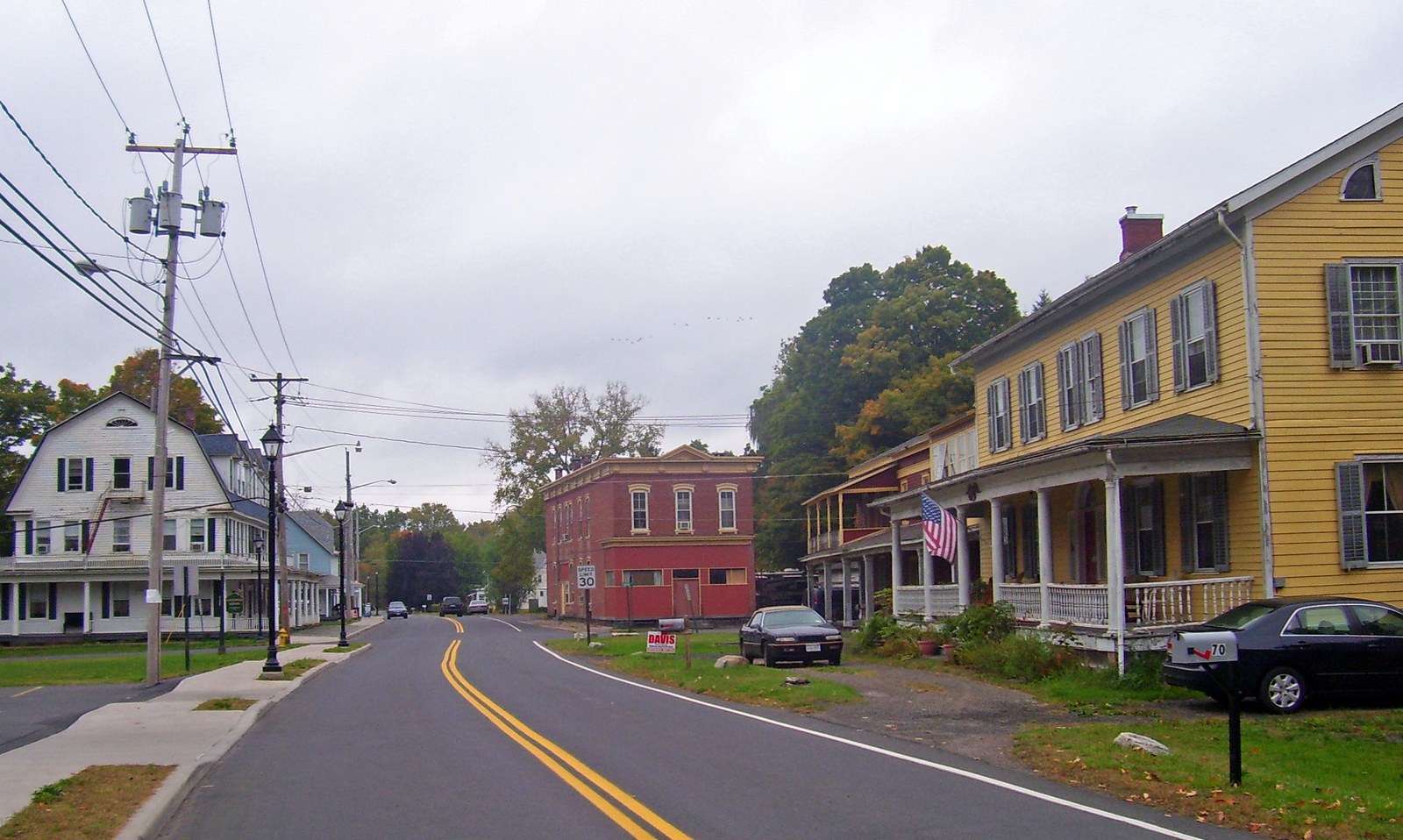
On a quiet evening in Napanoch, a small hamlet in the foothills of the Shawangunk Mountains, Main Street narrows to a single winding road lined with old clapboard houses. At 56 Main Street stands a pale wooden hotel with a gambrel roof and a long two-storey porch, its windows lit against the darkening hills. It looks, as more than one visitor has put it, exactly like a haunted hotel should. Inside, the rooms carry the names of the dead, and the night’s entertainment is a guided hunt for ghosts.
The Shanley Hotel is one of New York State’s best-known haunted places, and unlike many such sites it does not play the stories down. The ghosts are the reason guests come. But behind the ghost hunts lies a documented history of fire, family loss and long abandonment — a history that is, in many ways, sadder than any ghost story.
A hotel that burned to its foundations
A hotel has stood on this spot since 1845, when Thomas Ritch built the first inn on Napanoch’s Main Street. Over the next fifty years it changed hands again and again, trading under names including Hungerford’s Hotel, the Topatcoke House and the Napanoch Hotel. That first era ended in fire. On 18 March 1895, a blaze that began in a nearby house spread to the hotel and burned it to its foundations. The landlord at the time, Adolph Wagner, did not abandon the site. A new frame was up by September of the same year, and by November the rebuilt hotel was open again, this time as the Colonial Hotel. The building that stands on Main Street today is, in its bones, that 1895 rebuilding — which is why the hotel is often described as having been built in 1895, even though a hotel had occupied the site for fifty years before that.
James and Beatrice Shanley
The hotel took the name it still carries in 1906. On 1 October that year, James Louis Shanley, an Irish American born in 1876, bought the Colonial Hotel for $10,000. Shanley was an energetic owner. He added a bowling alley, a billiard room and a barbershop, built second-floor apartments, and turned the hotel into one of the best-known inns in the area. In April 1910 he married Beatrice Rowley in the hotel itself, and the couple ran the place together, with Beatrice becoming known as a hostess famous for her teas and card parties.
The Shanleys’ years were also the hotel’s most colourful. During Prohibition the hotel worked as a speakeasy, with bootleg liquor hidden under the bar, and a raid in 1932 led to James’s arrest, although neither he nor his supplier served time. According to the hotel’s own history, a bordello operated upstairs in the 1920s.
James Shanley died of a heart attack on 26 August 1937. Beatrice kept the hotel going for another seven years before selling it in 1944 to Allen H. Hazen. From there the hotel passed through several more owners, ending its working life as the James Shanley Tap Room before closing in 1991. It then stood empty for more than a decade, a derelict landmark on Main Street.
Three small losses, and a well across the road
The reason the Shanley’s ghost stories feel heavier than most is that the tragedies behind them are documented, and they concern children. James and Beatrice Shanley lost all three of their babies in infancy: their daughter Kathleen died in January 1912, at under six months old; their son James Jr. died in 1914, at four months; and their son William died in 1916, at nine months.
A second family’s loss is tied to the barbershop James Shanley added. He hired Peter Greger, a barber from Brooklyn, who lived at the hotel with his wife and two daughters. On 26 May 1911, Greger’s three-year-old daughter Rosie — Jeanette Roseanne Greger — fell into a well on the farm across the road and drowned. The Greger family moved back to Brooklyn soon afterwards.
A third loss followed a few years later. Beatrice’s sister, Esther Faughman, lived in the apartment next door and died of influenza in 1918, leaving Beatrice to raise her two daughters. The room where Esther died is now one of the most requested rooms in the hotel.
None of this proves a haunting. But it explains why the names attached to the hotel’s reported ghosts are the names of real people whose deaths are recorded, and why the stories told about the building so often return to grief rather than to menace.
The long empty years
After its closure in 1991, the Shanley sat vacant while the hamlet around it changed. It was bought in 2005 by Salvatore Nicosia, who began restoring the derelict building and reopened it in 2007, leaning into the ghost stories that had drawn visitors for years. Nicosia died in July 2016, and after a period of closure the hotel reopened in 2018 under new management. It was later bought by Kelly Hammerling and her husband, who had led investigations at the hotel for years, and under them it became a full-time paranormal hotel, with nightly ghost hunts, day tours and special events.
That transformation is the Shanley’s modern identity. An overnight stay typically includes a staff-led ghost hunt in the evening, followed by free time for guests to investigate on their own, and guests book its ten named rooms specifically for the stories. The hotel has appeared on television, on Ghost Hunters (season 7, episode 17) and on Discovery’s Ghost Lab (season 2, episode 6), and the owners say they have made contact with more than thirty different spirits.
What guests report
The best-known figure in the hotel’s lore is Beatrice Shanley herself. Guests and staff say she never left, and reports associated with her include the sound of a woman crying, a sudden wave of sadness in certain rooms, and a floral perfume with no visible source — Beatrice was known in life for her fragrant perfumes. Guest notebooks are full of notes describing her as always watching.
Rosie Greger is said to be one of the hotel’s most active spirits. Her room, in the old bordello area, is filled with toys, and investigators report children’s laughter, small footsteps, and trigger objects moving when they ask for her by name. Esther’s Room, on the second floor, is the room guests ask for most often, and the Gentleman’s Quarters on the ground floor — the former barbershop and bordello waiting area — is popular with groups.
Other figures named by staff include Frank, said to have been a bodyguard from the bordello days, and a man called Joe, who is said never to answer questions about his past. Typical reports across the building are footsteps, piano music, clocks chiming, rocking chairs moving on their own, cold spots, and the smell of cooking when the kitchen is closed. The séance room is described as the heart of the activity, and the third floor is said to be particularly active, with footsteps heard overhead through the night.
All of this is reported, not proven. The hotel’s own history and the guides that cover it are careful on this point: the evidence for a haunting consists of guest accounts, staff accounts and recordings, not proof. What is striking is how consistent the reports are over many years, and how closely the names in them match the documented dead.
Visiting today
The Shanley is open to the public and welcomes visitors who want to investigate for themselves. Overnight stays include the staff-led ghost hunt and a continental breakfast, and day tours and evening investigations without a stay are also offered. Rooms are booked directly with the hotel, and the most requested are Esther’s Room and the bordello rooms. Prices and schedules change, so anyone planning a visit should check the hotel’s own website before travelling.
The hamlet sits at the foot of the Shawangunk Ridge, a short drive from Minnewaska State Park Preserve and Sam’s Point. Whether or not anything lingers in the rooms upstairs, the building is a genuine survivor: a nineteenth-century hotel that burned, was rebuilt, lost its founding family to grief, stood empty for years, and was brought back to life by people who believed its stories were worth preserving.
What is documented — and what is not
Documented: A hotel has stood on the site since 1845; the present building is the 1895 rebuilding after the fire of 18 March 1895. James Louis Shanley bought it on 1 October 1906 for $10,000 and died on 26 August 1937; Beatrice sold it in 1944. The deaths of the Shanleys’ three infant children (1912, 1914, 1916), of Rosie Greger on 26 May 1911, and of Esther Faughman in 1918 are recorded in the hotel’s researched timeline. The hotel closed in 1991, was bought by Salvatore Nicosia in 2005, reopened in 2007, and reopened again under new management in 2018. It appeared on Ghost Hunters and Ghost Lab.
Not verified or presented only as reported: The identities and personalities of the spirits — Beatrice, Rosie, Frank, Joe and the rest — come from investigations and psychic sessions at the hotel, and should be treated as the hotel’s living folklore rather than recorded history. The claim of contact with more than thirty spirits is the owners’ claim. Visits by famous guests such as Thomas Edison and Eleanor Roosevelt are often repeated but are hard to confirm. Some older accounts give different dates for the closure and for Nicosia’s purchase. No ghost story in this article should be read as established fact.
Sources
- The Haunted Shanley Hotel, “Our History” — https://thehauntedshanleyhotel.com/our-history/
- Haunted Rooms, “The Haunted Shanley Hotel, Napanoch NY: Ghosts and Rooms” — https://www.hauntedrooms.com/new-york/haunted-places/haunted-hotels/shanley-hotel
- Haunted History Trail of New York State, “The Shanley Hotel” — https://hauntedhistorytrail.com/explore/the-shanley-hotel
- Mental Floss, “The Long, Haunted History of New York’s Shanley Hotel” — https://www.mentalfloss.com/history/long-haunted-history-new-yorks-shanley-hotel
- Classic New York History, “10 Haunted Places in the Hudson Valley You Can Actually Visit” — https://classicnewyorkhistory.com/haunted-places-hudson-valley/
- US Ghost Adventures, “Haunts and History of the Shanley Hotel” — https://usghostadventures.com/americas-most-haunted-hotels-and-inns/haunts-and-history-of-the-shanley-hotel/